AI Must Shift Healthcare From Crisis Response To Early Intervention Across APAC
10 June 2026 | Wednesday | News
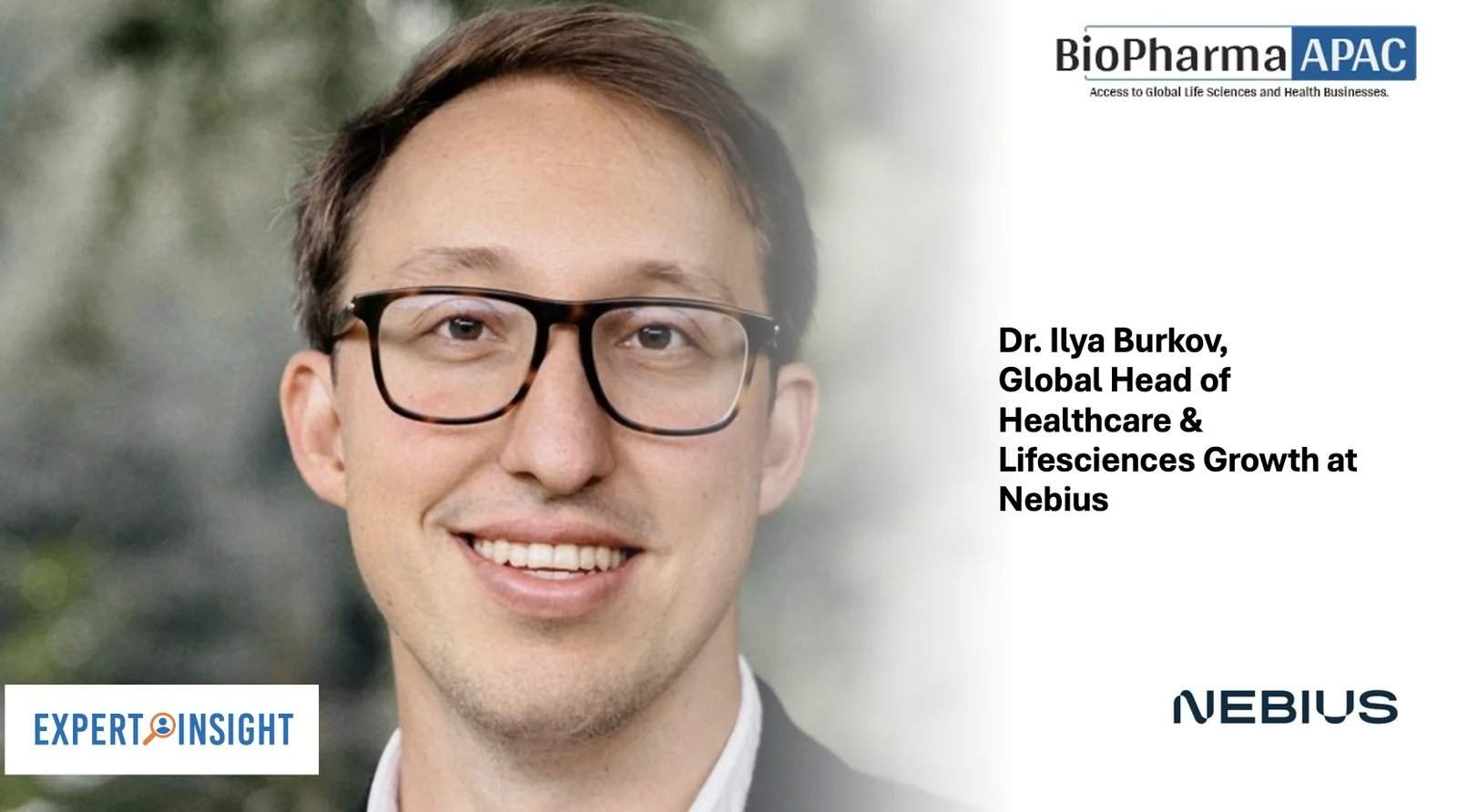
As healthcare systems across Asia Pacific confront mounting workforce shortages, ageing populations, and rising chronic disease burdens, artificial intelligence is emerging as a critical enabler of more efficient and preventive care delivery. However, scaling AI in healthcare requires far more than deploying new technologies. It demands robust governance, clinician trust, regulatory alignment, and system-wide transformation. In this exclusive conversation with BioPharma APAC, Dr. Ilya Burkov, Global Head of Healthcare and Lifesciences at Nebius, shares his perspectives on where AI can deliver the fastest measurable impact, the safeguards needed for AI guided diagnostics, and why the future of healthcare will be defined by collaboration between clinicians, allied healthcare professionals, and AI powered clinical co pilots.
Across Asia Pacific, where do you believe AI can create the fastest measurable impact in addressing healthcare workforce shortages?
The fastest measurable impact will come in chronic disease management, diagnostics, and primary care triage, particularly in healthcare systems already struggling with ageing populations and clinician shortages.
One of the clearest opportunities is reducing potentially avoidable hospitalizations, by preventing hospital admissions for manageable conditions like heart failure, COPD, asthma and diabetes. With earlier intervention and stronger outpatient care, healthcare systems can prevent patients from deteriorating to the point of emergency admission.
The practical shift is toward using AI to expand the reach of frontline care teams. Healthcare systems are already seeing how it can identify high-risk patients earlier, prioritize follow-ups, support more accurate referrals and reduce unnecessary pressure on emergency departments. The goal is to redesign the flow of care so fewer patients reach crisis point. AI can act like an intelligent traffic control system for healthcare, helping clinicians spot congestion and risk before the system becomes overwhelmed.
The concept of AI-guided diagnostics operated by non-clinical staff is highly disruptive. What safeguards and governance models are essential to build trust among clinicians and regulators?
Trust will depend on whether healthcare systems establish clear accountability, strong governance and meaningful clinical oversight from the beginning.
A practical example is AI-guided echocardiography, where non-clinical staff can conduct routine scans with AI supporting measurement capture and triage, while clinicians review results remotely and remain responsible for diagnosis and care decisions.
That distinction is critical. AI should augment clinical capacity, not remove clinical accountability.
To build trust with regulators and clinicians, governance models need four things: clinician oversight, traceable outputs, bias monitoring and version control. If an AI system recommends a next step, providers need to understand what evidence informed it, how current the model is and where its limitations lie.
Healthcare also needs clearer regulatory pathways that allow innovation to move at the speed of technology while maintaining patient safety and privacy protections.
Autopilot transformed aviation safety and scalability, but only because there are strict protocols, audit trails and trained pilots in command. Healthcare AI will require the same discipline.
Many healthcare systems still operate on treatment-driven reimbursement structures. How can policymakers redesign incentives to support preventive and AI-enabled care models?
Healthcare systems still reward intervention more consistently than prevention. Today, hospitals are often reimbursed for treating acute illness, not for preventing diseases. That creates a structural mismatch. An AI system may reduce avoidable admissions and improve long-term outcomes, but the financial benefit may appear somewhere else in the system entirely.
AI pilots can improve outcomes and reduce costs downstream, but those benefits are not always captured by the institution making the investment.
Policymakers can address this by shifting toward outcome-based reimbursement models that reward fewer hospitalizations, faster diagnosis, stronger treatment adherence and better chronic disease management.
Shared savings models will also become increasingly important. If AI helps reduce system-wide costs, then hospitals, primary care providers and payers should all participate in the value created.
Healthcare systems need to stop rewarding only the fire brigade and start investing in fire prevention.
What are the biggest mistakes healthcare institutions make when approaching AI as a technology implementation rather than a holistic, system-wide transformation?
The biggest mistake is treating AI like software procurement instead of broader transformation than often involves several stakeholders AI changes workflows, responsibilities and decision-making across the patient journey. When hospitals approach deployment as a purely technical exercise, they often underestimate the importance of clinician trust, nursing workflows, compliance, ethics and operational integration.
For healthcare institutions, successful AI deployment requires multidisciplinary involvement from day one, including clinicians, nurses, AI specialists, ethics teams and compliance leaders.
Another common mistake is introducing more complexity into already overstretched environments. If AI adds friction, additional clicks or unclear accountability, clinicians simply will not use it. The strongest deployments are almost invisible to the end user. They fit naturally into workflows, surface relevant insights at the right moment and reduce administrative burden without disrupting patient care.
From your observations, which countries in Asia Pacific are currently best positioned to scale AI-enabled healthcare delivery effectively, and why?
Singapore is particularly well positioned because it combines strong digital infrastructure, policy alignment and a national focus on preventive healthcare. That creates an environment where predictive AI, risk stratification and earlier intervention can scale relatively quickly.
South Korea also has strong foundations, especially in digital maturity and healthcare technology adoption. Across Southeast Asia, there is also a significant leapfrog opportunity. Some healthcare systems can move directly toward AI-enabled community diagnostics, pharmacy-based screening and more distributed care models without carrying the same legacy infrastructure burdens as older systems.
Models such as community screening and “hospitals without walls” can help bring diagnostics and monitoring closer to patients while easing pressure on hospitals.
Ultimately, the countries best positioned to scale successfully will be those that align regulation and infrastructure to emerging patient needs. Without these elements moving together, AI tends to remain stuck in pilot programs.
Looking ahead five years, how do you envision the relationship between clinicians, allied healthcare workers, and AI evolving inside hospitals and primary care environments?
With AI changing at breakneck speed, it's tough to map out a massive transition that involves so many different stakeholders across healthcare systems. What is clear is AI will move from the spotlight as a standalone tool to the background of everyday clinical care
Clinicians will remain the central decision-makers, but AI will increasingly function as a clinical co-pilot: summarizing records, identifying risk patterns, supporting guideline-directed care and reducing administrative workload.
At the same time, allied healthcare workers will likely take on broader responsibilities in diagnostics, monitoring and follow-up, supported by AI systems operating under clinician supervision.
This is where AI applications are heading: expanding primary care capacity, guiding high-risk patients toward earlier intervention and reducing pressure on secondary care environments.
The relationship between healthcare professionals and AI will become more collaborative and team-based. AI will handle much of the repetitive pattern recognition and data synthesis, allowing clinicians to focus on judgment, communication and patient trust.
The goal is not less human care. It is giving healthcare professionals more time to focus on the parts of care only humans can provide: judgment, empathy, communication and trust.
Most Read
- Can APAC Biomanufacturing Decarbonise Without Pricing Itself Out?
- The Algorithm on the GMP Floor: AI Promises a Smarter Plant. Regulators Demand the Audit Trail.
- APAC's Peptide-Capacity Gamble
- After the Rush: APAC's mRNA and Vaccine Capacity Hangover
- The Biosimilar Race: Factory to the World — or Stuck in the Copycat Economy?
- The Vein-to-Vein Problem: Can APAC's Cold Chain Carry Advanced Therapies?
- Vectors, Plasmids and the CGT Trap: APAC's Cell and Gene Therapy Ambitions Face an Upstream Bottleneck
- Can APAC Build Radioligand Therapy Before the Atoms Decay?
- The Great Biopharma Reset: 50 Developments That Changed Everything in H1 2026
- Beyond the Trial: Can Real-World Evidence Earn Regulatory Trust in APAC?
- Beyond the Obvious Giant: Where APAC's Clinical Trials Go Next
- The Frontier That Won’t Quite Arrive
Bio Jobs
- Sanofi Turns The Page As Belén Garijo Steps In And Paul Hudson Steps Out
- Global Survey Reveals Nearly 40% of Employees Facing Fertility Challenges Consider Leaving Their Jobs
- BioMed X and AbbVie Begin Global Search for Bold Neuroscience Talent To Decode the Biology of Anhedonia
- Thermo Fisher Expands Bengaluru R&D Centre to Advance Antibody Innovation and Strengthen India’s Life Sciences Ecosystem
- Accord Plasma (Intas Group) Acquires Prothya Biosolutions to Expand Global Plasma Capabilities
- ACG Announces $200 Million Investment to Establish First U.S. Capsule Manufacturing Facility in Atlanta
- AstraZeneca Invests $4.5 Billion to Build Advanced Manufacturing Facility in Virginia, Expanding U.S. Medicine Production
News