Thermo Fisher Scientific Expands Access To Structural Biology With Glacios 3 Cryo TEM
01 April 2026 | Wednesday | News
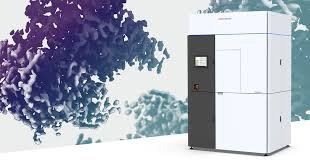
Equipped with the READY System to make structural biology research accessible to more labs
Thermo Fisher Scientific, the world leader in serving science, introduces a next-generation cryogenic transmission electron microscope (cryo-TEM) designed to help scientists understand structural biology with greater clarity — now accessible in more lab environments than ever before. The Thermo Scientific™ Glacios™ 3 Cryo-TEM offers researchers the next major advancement in 200 kV imaging and structural analysis.
Cryogenic electron microscopy (cryo-EM), an advanced technique of flash-freezing biomolecules to visualize them in their native states, enables the Glacios 3 Cryo-TEM to help researchers advance structure-based drug design. Cryo-EM has played a critical role in the development of RSV vaccines, GLP-1 therapies and ongoing research into potential HIV vaccines.
The Glacios 3 Cryo-TEM is equipped with the Thermo Scientific™ READY™ System, an integrated suite of technologies that mitigates vibrations and environmental disturbances, which enables installation in a broader range of laboratory spaces by significantly reducing lab renovation complexity. AI-powered software facilitates cryo-EM workflows to significantly increase throughput and data quality in comparison to traditional platforms.
New design features improve ease-of-use, increase productivity and enhance connectivity to transfer samples without contamination. These features provide access to a range of high-performance cryo-EM techniques, including single particle analysis, cryo-electron tomography (cryo-ET), and microcrystal electron diffraction (microED).
“The Glacios 3 Cryo-TEM opens the door for more institutions and researchers to harness the capabilities of cryo-EM, helping them tackle complex biological questions and enhance therapeutic development,” said Steve Reyntjens, Thermo Fisher Scientific vice president and general manager of life sciences. “This combination of advanced instrumentation and AI-powered workflows represents a step change in how scientists generate insights, which will accelerate the development of life-improving treatments.”
“When first presented with news of the Glacios 3, I was delighted to learn of the latest developments on its platform,” said Dr. Steve Smerdon, a professor of structural biology in the University of Birmingham Department of Cancer and Genomic Sciences. “The improvements to the enclosure are particularly impressive, as they will allow greater flexibility in choosing a site for the instrument with potentially substantial reductions in refurbishment and running costs.”
Most Read
- Can APAC Biomanufacturing Decarbonise Without Pricing Itself Out?
- The Algorithm on the GMP Floor: AI Promises a Smarter Plant. Regulators Demand the Audit Trail.
- APAC's Peptide-Capacity Gamble
- After the Rush: APAC's mRNA and Vaccine Capacity Hangover
- The Biosimilar Race: Factory to the World — or Stuck in the Copycat Economy?
- The Vein-to-Vein Problem: Can APAC's Cold Chain Carry Advanced Therapies?
- Vectors, Plasmids and the CGT Trap: APAC's Cell and Gene Therapy Ambitions Face an Upstream Bottleneck
- Can APAC Build Radioligand Therapy Before the Atoms Decay?
- The Great Biopharma Reset: 50 Developments That Changed Everything in H1 2026
- Beyond the Trial: Can Real-World Evidence Earn Regulatory Trust in APAC?
- Beyond the Obvious Giant: Where APAC's Clinical Trials Go Next
- The Frontier That Won’t Quite Arrive
Bio Jobs
- Sanofi Turns The Page As Belén Garijo Steps In And Paul Hudson Steps Out
- Global Survey Reveals Nearly 40% of Employees Facing Fertility Challenges Consider Leaving Their Jobs
- BioMed X and AbbVie Begin Global Search for Bold Neuroscience Talent To Decode the Biology of Anhedonia
- Thermo Fisher Expands Bengaluru R&D Centre to Advance Antibody Innovation and Strengthen India’s Life Sciences Ecosystem
- Accord Plasma (Intas Group) Acquires Prothya Biosolutions to Expand Global Plasma Capabilities
- ACG Announces $200 Million Investment to Establish First U.S. Capsule Manufacturing Facility in Atlanta
- AstraZeneca Invests $4.5 Billion to Build Advanced Manufacturing Facility in Virginia, Expanding U.S. Medicine Production
News