How Are Peptides Made? A Simple Guide to Peptide Synthesis
06 October 2026 | Tuesday | News
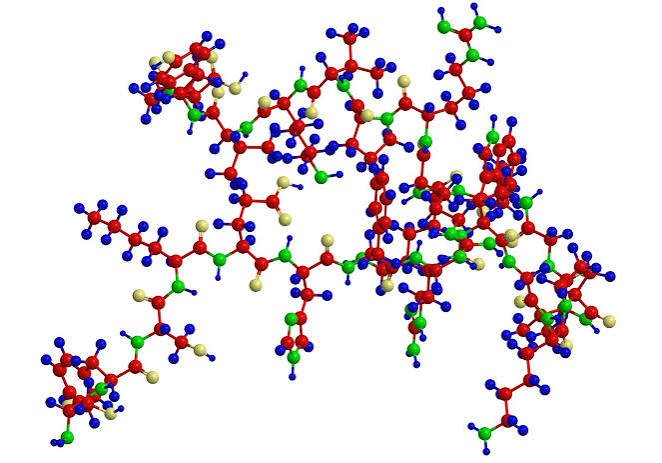
What Is a Peptide?
First, a quick look at what is being built. Amino acids are small building-block molecules, and living things use 20 standard ones to make proteins.
- Peptide: a short chain of amino acids held together by chemical links called peptide bonds. Picture a string of beads. Each bead is an amino acid, and each knot between two beads is a peptide bond.
- Protein: also a chain of amino acids, just a much longer one.
- Coupling: the word chemists use for the step that creates a new peptide bond.
How Are Peptides Made? The Three Main Methods
There are three main ways to make a peptide.
|
Method |
How it works |
Often used for |
Main limit |
|
Solid-phase synthesis |
The chain is built on tiny resin beads and rinsed after each step |
Most research peptides and many drug peptides |
Harder as chains get longer |
|
Solution-phase synthesis |
The chain is built in a liquid and cleaned after every step |
Large-scale manufacturing |
Slow, with many cleanup steps |
|
Recombinant production |
Engineered bacteria or yeast follow DNA instructions to make it |
Long peptides and proteins |
Needs living cells and extra separation |
Insulin is a good real-world example of the third method. In the early 1980s, engineered E. coli bacteria became the first practical, large-scale source of human insulin (Endocrine Reviews).
How Solid-Phase Peptide Synthesis Works, Step by Step
Solid-phase synthesis is the method most labs rely on today. Chemist Bruce Merrifield developed it in the early 1960s and later won the 1984 Nobel Prize in Chemistry for it.
The big idea is simple. One end of the chain is attached to a tiny plastic bead, so the lab can rinse away leftover chemicals after every step without losing the peptide (NIH PubMed Central review).
Step 1: Attach the First Amino Acid to a Bead
Every amino acid has two ends: a "C-end" (carboxyl end) and an "N-end" (amino end). The first amino acid is attached to the bead by its C-end, and the chain grows toward the N-end.
Step 2: Remove the Protective Cap
Each amino acid comes with a temporary chemical "cap" on its N-end, called a protecting group. Like the cap on a pen, it keeps that end covered so it cannot react too early. Before the next amino acid joins, the cap comes off. In the popular Fmoc method, a mild base does the job.
Step 3: Add and Link the Next Amino Acid
Next, the new amino acid goes in with helper chemicals called coupling reagents. These "switch on" the amino acid so it bonds to the chain.
Step 4: Repeat, Then Cut the Peptide Free
Steps 2 and 3 repeat for every amino acid, and machines called peptide synthesizers can do this automatically. Once the chain is complete, a strong acid called TFA (trifluoroacetic acid) cuts the peptide off the bead and removes the remaining protecting groups.
|
Fmoc method |
Boc method |
|
|
Cap removed with |
Mild base |
Moderate acid (TFA) |
|
Peptide released with |
TFA |
Hydrogen fluoride (HF), a very strong acid |
|
Use today |
Main method |
Specialist uses |
Fmoc is used more mainly because its conditions are milder. In one six-year study of core peptide labs, Fmoc use grew from 50% in 1991 to 98% by 1994, and a 2016 review still calls it the method of choice (Journal of Peptide Science).
Cleaning and Checking the Finished Peptide
A peptide is not finished when it comes off the bead. This "crude" peptide can contain by-products, like chains missing an amino acid or chains that stopped growing too early. Labs rely on two main tools:
- HPLC (high-performance liquid chromatography): The sample is pushed through a packed tube. Different molecules travel at different speeds, so they come out at different times. This separates the peptide the lab wants and measures its purity as a percentage.
- Mass spectrometry: This weighs molecules very precisely. If the weight matches what the lab expected, that is a strong sign the right peptide was made.
Experts recommend more than one check, and HPLC plus mass spectrometry is the standard pairing (Pharmaceutical Research). After these checks, the peptide is usually freeze-dried into a powder.
If you source research peptides instead of making them, it is worth asking suppliers of lab-tested research peptides for the HPLC and mass spectrometry data behind each batch.
Why Longer Peptides Are Harder to Make
Every round of synthesis has a small chance of something going wrong. One error may not matter much, but errors add up, so the longer the chain, the harder it is to make cleanly.
- "About 50 amino acids" is often quoted as the practical limit, but the 2016 review notes this is not a fixed rule. Some short sequences are hard too.
- For longer chains, chemists can join shorter pieces (native chemical ligation) or switch to recombinant production.
Frequently Asked Questions
Can you synthesize your own peptides?
Not easily. It is specialist lab work that needs automated synthesizers, strong acids such as TFA, HPLC and mass spectrometry instruments, and trained chemists.
Are peptides basically drugs?
Not always. Some peptides, such as insulin, are used as medicines. Many others are made only for laboratory research, and some, like the sweetener aspartame, are food ingredients.
Why is HPLC used in peptide synthesis?
It separates the target peptide from by-products, so labs can purify it and measure how pure it is.
Disclaimer: This article is for educational purposes only and is not medical advice. Research peptides are intended for laboratory research use only and are not for human or veterinary use.
Most Read
- Can APAC Biomanufacturing Decarbonise Without Pricing Itself Out?
- The Algorithm on the GMP Floor: AI Promises a Smarter Plant. Regulators Demand the Audit Trail.
- APAC's Peptide-Capacity Gamble
- After the Rush: APAC's mRNA and Vaccine Capacity Hangover
- The Biosimilar Race: Factory to the World — or Stuck in the Copycat Economy?
- The Vein-to-Vein Problem: Can APAC's Cold Chain Carry Advanced Therapies?
- Vectors, Plasmids and the CGT Trap: APAC's Cell and Gene Therapy Ambitions Face an Upstream Bottleneck
- Can APAC Build Radioligand Therapy Before the Atoms Decay?
- The Great Biopharma Reset: 50 Developments That Changed Everything in H1 2026
- Beyond the Trial: Can Real-World Evidence Earn Regulatory Trust in APAC?
- Beyond the Obvious Giant: Where APAC's Clinical Trials Go Next
- The Frontier That Won’t Quite Arrive
Bio Jobs
- Sanofi Turns The Page As Belén Garijo Steps In And Paul Hudson Steps Out
- Global Survey Reveals Nearly 40% of Employees Facing Fertility Challenges Consider Leaving Their Jobs
- BioMed X and AbbVie Begin Global Search for Bold Neuroscience Talent To Decode the Biology of Anhedonia
- Thermo Fisher Expands Bengaluru R&D Centre to Advance Antibody Innovation and Strengthen India’s Life Sciences Ecosystem
- Accord Plasma (Intas Group) Acquires Prothya Biosolutions to Expand Global Plasma Capabilities
- ACG Announces $200 Million Investment to Establish First U.S. Capsule Manufacturing Facility in Atlanta
- AstraZeneca Invests $4.5 Billion to Build Advanced Manufacturing Facility in Virginia, Expanding U.S. Medicine Production
News