Advancing Freeze-to-Store Workflows for the Next Era of Biopharmaceutical Manufacturing
03 August 2026 | Monday | Expert Insight
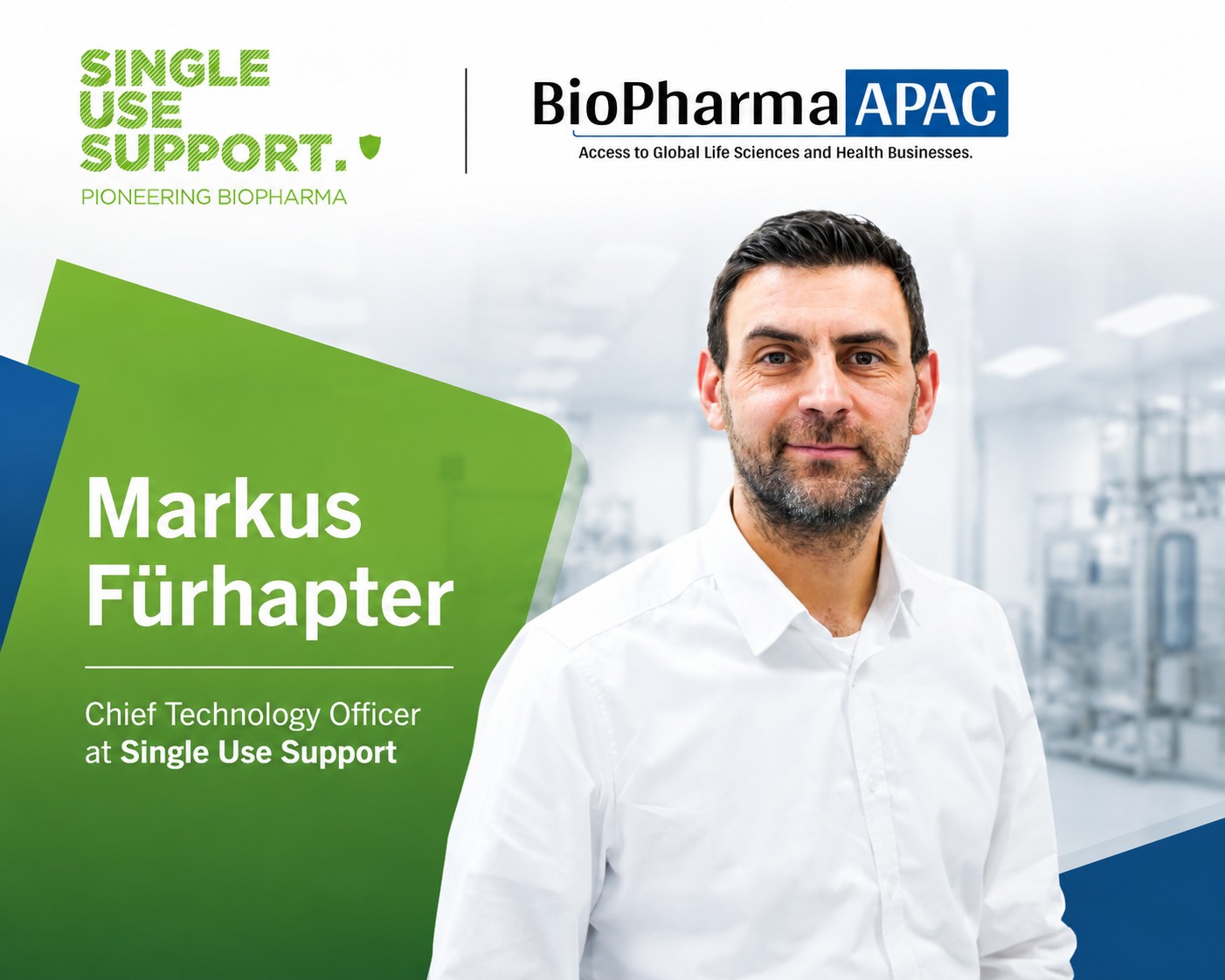
What operational challenges in freezing and ultra-low temperature storage of bulk drug substances motivated the development of your next-generation controlled-rate blast freezer, and how does this innovation address them?
Markus Fürhapter:
One challenge I often hear from biopharmaceutical manufacturers and CDMOs is that production volumes are growing faster than cold storage infrastructure. Companies are processing increasingly larger batches of bulk drug substance, but freezer capacity and facility footprints are often fixed. Expanding facility footprint to increase space for additional cold storage is expensive and, in many cases, simply not practical. They’re also expected to handle a broader range of products, packaging formats, and customer requirements while maintaining the same level of quality and operational efficiency.
Breaking this down to freezing and ultra-low temperature (ULT) storage of drug substances, we often observe that these process steps are treated as separate operations. This misalignment leads to many additional handling steps, fragmented material flow, batch splitting, and unnecessary workflow complexity. From a management perspective, that creates higher costs, reduced throughput, and increased operational risk.
These challenges were a key driver behind the development of our next-generation controlled-rate blast freezer RoSS.BLST and the ultra-low temperature storage freezer RoSS.ULTF. Rather than looking at freezing as an isolated process step, we approached it as part of an integrated freeze-to-store workflow. The vision extends beyond freezing and storage alone, connecting automated aseptic filling, controlled-rate freezing, ultra-low temperature storage, and thawing within one harmonized process. By aligning equipment capacities, container handling concepts, and material flow across these process steps, manufacturers can process increasingly large batches more efficiently while maintaining operational simplicity.
By aligning freezing performance with downstream storage requirements, manufacturers can process full batches exceeding 200L more efficiently, simplify operations, and create a cold chain infrastructure that is better prepared for future growth.
CDMOs are increasingly under pressure to improve efficiency while maintaining product integrity. How does integrating freezing and ULT storage into a unified workflow help reduce operational complexity and strengthen supply chain resilience?
Markus Fürhapter:
When companies talk about optimizing cold chain operations, the discussion often focuses on either freezing performance or storage capacity. In my view, the bigger opportunity lies in improving the connection between the two.
Many facilities still operate freezing and storage as separate systems with different capacities, workflows, and handling requirements. As products move between those stages, complexity increases. Additional transfers, redistribution of frozen materials, and manual interventions become necessary, introducing inefficiencies and opportunities for error.
An integrated cold chain approach creates a more seamless process. In our view, the greatest efficiency gains come when manufacturers connect automated aseptic filling, freezing, ultra-low temperature storage, and thawing into a single workflow rather than optimizing each step separately. Using harmonized transport dollies, racks, and loading systems, material can move efficiently through every stage of the process with minimal intervention. Just as importantly, the workflow remains container-agnostic, supporting a wide range of bottle and bag formats without requiring different handling concepts for each product.
This flexibility is particularly valuable for CDMOs, where container formats and customer requirements vary significantly from project to project. Standardized handling across different primary packaging formats helps simplify operations while supporting future growth.
Controlled-rate freezing plays a critical role in preserving biologics and advanced therapies. What technological enhancements have been introduced in the new platform to improve process consistency, product quality and batch reproducibility?
Markus Fürhapter:
Process consistency is critical for all types of therapies, such as biologics, cell therapies, gene therapies, and other advanced therapies. Even small process variations can impact product quality, which makes reproducibility a key requirement across the entire cold chain.
One of our main priorities was creating highly controlled and reproducible freezing conditions that remain consistent regardless of batch size. Manufacturers need confidence that products are exposed to the same process conditions every time, particularly as operations scale from clinical to commercial manufacturing.
To support this, we introduced recipe-driven freezing protocols alongside advanced airflow management that helps ensure uniform temperature distribution throughout the chamber, supporting reproducible freezing conditions and reducing batch-to-batch variability. We also increased chamber efficiency of RoSS.BLST, providing 30% more usable chamber capacity than comparable blast freezers, allowing manufacturers to scale freezing operations without increasing their facility footprint.
But reproducibility is not only about the freezing cycle itself. The real challenge is maintaining consistency throughout the complete freeze-and-store workflow. That is why we focused on aligning freezing, storage, and material handling rather than optimizing each step independently. Batch sizes, container compatibility, and process flows are designed to work together as a unified system.
I believe this holistic approach is becoming increasingly important. As biologics manufacturing becomes more complex and products continue to increase in value, companies need process solutions that reduce variability while making operations easier to scale. The goal is not simply to improve freezing performance, but to give manufacturers greater confidence in the quality, integrity, and consistency of every batch.
As biologics, cell and gene therapies continue to grow, how are customer requirements for freezing, storage and logistics evolving, and what capabilities will become essential for next-generation manufacturing facilities?
Markus Fürhapter:
The industry is moving beyond individual equipment decisions and looking at the performance of the entire cold chain. As biologics, cell therapies, gene therapies, and other advanced therapies continue to grow, manufacturers must accommodate larger batch sizes exceeding 200 liters while maintaining flexibility for different products, customer requirements, and packaging formats. At the same time, protecting high-value drug substances throughout freezing, storage, and transportation has become a growing priority.
What will become increasingly important is the ability to scale without proportionally increasing operational complexity. Manufacturers want to maximize throughput within existing footprints while maintaining product integrity and operational control. High-density ULT storage, efficient material flow, standardized handling procedures, and compatibility with multiple container formats will all play a significant role.
The facilities that succeed over the next decade will not necessarily be the ones with the largest cold storage capacity. They will be the ones that can efficiently connect manufacturing, freezing, storage, and logistics into a streamlined and scalable workflow. In the years ahead, operational simplicity may become one of the industry's strongest competitive advantages.
Sustainability and operational efficiency are becoming strategic priorities across biopharmaceutical manufacturing. How can innovations in freezing and cold storage contribute to reducing waste, energy consumption and overall cost of ownership?
Markus Fürhapter:
Today, sustainability and operational efficiency are closely linked. In many cases, the same improvements that reduce environmental impact also help manufacturers lower costs and improve productivity.
A good example is facility utilization. Cold storage expansion requires significant capital investment, and available space is often limited. Technologies that increase storage density allow manufacturers to store more product within the same footprint, reducing the need for additional infrastructure.
Sustainability is also influenced by how equipment performs throughout its lifecycle. Systems that require less maintenance, consume less energy during operation, and minimize water usage contribute not only to environmental goals but also to lower operating costs. These factors are becoming increasingly important as manufacturers evaluate the total cost of ownership of cold chain infrastructure.
Another often overlooked factor is process efficiency. Every unnecessary handling step consumes resources, adds labor requirements, and increases the risk of product loss. When freezing and storage operate as disconnected processes, inefficiencies accumulate quickly. By contrast, integrated freezing and storage workflows help simplify material movement and reduce operational waste.
We offer freezers with natural refrigerants or air-cooled technologies with a global warming potential towards zero. Manufacturers can simply adjust these setting screws to decarbonize their cold chain processes. But there are some aspects I believe the industry is increasingly recognizing that sustainability is not only achieved through individual pieces of equipment alone. It comes from designing processes that use space, energy, and resources more effectively across the entire cold chain. When manufacturers take that broader view, both sustainability and total cost of ownership benefit.
Looking ahead, how do you envision digitalization, automation and data-driven process monitoring transforming freeze-and-store operations over the next five years, and what role will Single Use Support play in shaping this evolution?
Markus Fürhapter:
Manufacturers are increasingly looking for transparency and control across the entire bulk drug substance workflow, from automated aseptic filling and freezing through ultra-low temperature storage, thawing, and distribution. The next phase of digitalization will focus less on individual unit operations and more on connecting process steps into one intelligent and traceable workflow.
Over the next five years, I expect we will see a shift toward more automated and data-driven freeze-to-store workflows. Technologies such as recipe-driven freezing protocols, electronic batch records, and integrated process monitoring will help maximize product quality, reduce manual intervention while improving consistency and traceability. The real value will not come from collecting more data, but from using that data to better understand process performance and make faster, more informed operational decisions.
We are already moving in that direction today. All our freezing platforms use 21 CFR Part 11-compliant recipe-driven protocols to standardize process execution and support reproducible freeze-thaw performance. As these systems become increasingly connected, manufacturers will gain greater visibility into freezing conditions, batch histories, equipment utilization, and cold chain performance across the entire workflow.
At Single Use Support, we believe the future lies in connecting automated filling, freezing, storage, thawing, and material handling through standardized process and data architectures. The closer these operations work together, the easier it becomes for manufacturers to scale while maintaining quality, efficiency, and supply chain resilience.
Most Read
- Can APAC Biomanufacturing Decarbonise Without Pricing Itself Out?
- The Algorithm on the GMP Floor: AI Promises a Smarter Plant. Regulators Demand the Audit Trail.
- APAC's Peptide-Capacity Gamble
- After the Rush: APAC's mRNA and Vaccine Capacity Hangover
- The Biosimilar Race: Factory to the World — or Stuck in the Copycat Economy?
- The Vein-to-Vein Problem: Can APAC's Cold Chain Carry Advanced Therapies?
- Vectors, Plasmids and the CGT Trap: APAC's Cell and Gene Therapy Ambitions Face an Upstream Bottleneck
- Can APAC Build Radioligand Therapy Before the Atoms Decay?
- The Great Biopharma Reset: 50 Developments That Changed Everything in H1 2026
- Beyond the Trial: Can Real-World Evidence Earn Regulatory Trust in APAC?
- Beyond the Obvious Giant: Where APAC's Clinical Trials Go Next
- The Frontier That Won’t Quite Arrive
Bio Jobs
- Sanofi Turns The Page As Belén Garijo Steps In And Paul Hudson Steps Out
- Global Survey Reveals Nearly 40% of Employees Facing Fertility Challenges Consider Leaving Their Jobs
- BioMed X and AbbVie Begin Global Search for Bold Neuroscience Talent To Decode the Biology of Anhedonia
- Thermo Fisher Expands Bengaluru R&D Centre to Advance Antibody Innovation and Strengthen India’s Life Sciences Ecosystem
- Accord Plasma (Intas Group) Acquires Prothya Biosolutions to Expand Global Plasma Capabilities
- ACG Announces $200 Million Investment to Establish First U.S. Capsule Manufacturing Facility in Atlanta
- AstraZeneca Invests $4.5 Billion to Build Advanced Manufacturing Facility in Virginia, Expanding U.S. Medicine Production
News