Merz Therapeutics Submits XEOMIN For Paediatric Spasticity Indication Across Europe
27 January 2026 | Tuesday | News
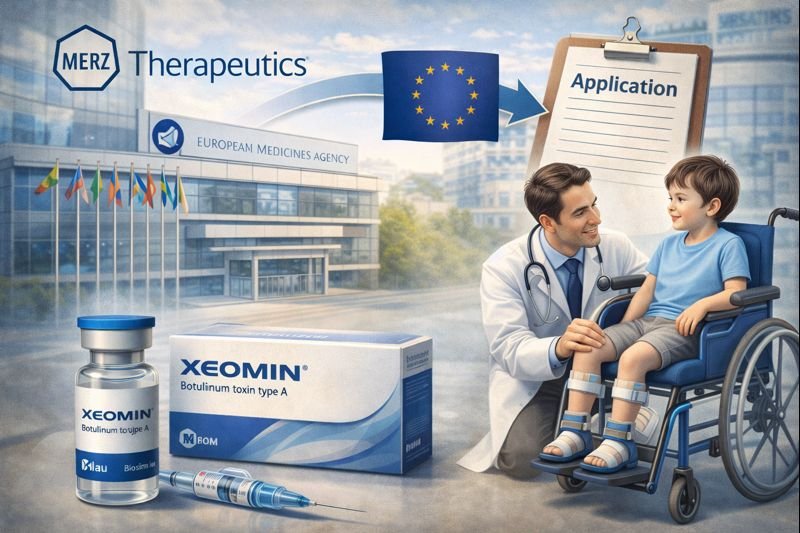
Merz Therapeutics, a leading player in neurology-focused specialty pharma, announced that it has completed the regulatory submission for XEOMIN® (incobotulinumtoxinA) for the treatment of spasticity of the lower and upper limb in children and adolescents aged 2–17 years in the European Union (EU) and European Economic Area (EEA). If approved, the indication would expand access to an established botulinum neurotoxin therapy for some of the youngest and most vulnerable patients across Europe.
Spasticity is a common and often debilitating condition in children and adolescents with certain neurological conditions, leading to increased muscle tone that can significantly limit movement, function and independence. One of the most common underlying causes of spasticity in children is cerebral palsy (CP), the most frequent motor disability in childhood, with spastic forms accounting for approximately 80% of all cases. In more severe cases, spasticity associated with CP can also affect speech, swallowing and fine motor skills.1,2
“We have made the conscious and ethical decision to advance our pediatric spasticity program. The submission of this important application for an indication extension in Europe represents another milestone in our long‑term commitment to improving standards of care for children and adolescents living with spasticity,” said Dr. Stefan Albrecht, Chief Scientific and Medical Officer, Merz Therapeutics.
Submission based on comprehensive clinical dossier update
The regulatory package submitted to the European Medicines Agency includes a comprehensive update of the clinical dossier, with data from the Phase 3 ELLIE study and prior pediatric spasticity investigations evaluating multipattern treatment of the lower limb, and, where appropriate, concomitant upper‑limb treatment.
The positive results of the prospective, randomized, placebo-controlled, two-stage, double-blind, multicenter, 28-week Phase 3 clinical trial ELLIE were recently presented at the TOXINS 2026 8th International Congress on Neurotoxins from January 14 to 17, 2026. The Phase 3 trial investigated incobotulinumtoxinA in the treatment of lower limb spasticity in children and adolescents with CP and showed how incobotulinumtoxinA significantly improved lower limb spasticity in children and adolescents with CP, while demonstrating a favorable safety and tolerability profile.
Most Read
- Can APAC Biomanufacturing Decarbonise Without Pricing Itself Out?
- The Algorithm on the GMP Floor: AI Promises a Smarter Plant. Regulators Demand the Audit Trail.
- APAC's Peptide-Capacity Gamble
- After the Rush: APAC's mRNA and Vaccine Capacity Hangover
- The Biosimilar Race: Factory to the World — or Stuck in the Copycat Economy?
- The Vein-to-Vein Problem: Can APAC's Cold Chain Carry Advanced Therapies?
- Vectors, Plasmids and the CGT Trap: APAC's Cell and Gene Therapy Ambitions Face an Upstream Bottleneck
- Can APAC Build Radioligand Therapy Before the Atoms Decay?
- The Great Biopharma Reset: 50 Developments That Changed Everything in H1 2026
- Beyond the Trial: Can Real-World Evidence Earn Regulatory Trust in APAC?
- Beyond the Obvious Giant: Where APAC's Clinical Trials Go Next
- The Frontier That Won’t Quite Arrive
Bio Jobs
- Sanofi Turns The Page As Belén Garijo Steps In And Paul Hudson Steps Out
- Global Survey Reveals Nearly 40% of Employees Facing Fertility Challenges Consider Leaving Their Jobs
- BioMed X and AbbVie Begin Global Search for Bold Neuroscience Talent To Decode the Biology of Anhedonia
- Thermo Fisher Expands Bengaluru R&D Centre to Advance Antibody Innovation and Strengthen India’s Life Sciences Ecosystem
- Accord Plasma (Intas Group) Acquires Prothya Biosolutions to Expand Global Plasma Capabilities
- ACG Announces $200 Million Investment to Establish First U.S. Capsule Manufacturing Facility in Atlanta
- AstraZeneca Invests $4.5 Billion to Build Advanced Manufacturing Facility in Virginia, Expanding U.S. Medicine Production
News