
Vir Biotechnology’s Hepatitis Delta Combo Suppresses Virus to Undetectable Levels in All 28 Week 96 Completers
10 November 2026 | Tuesday | News
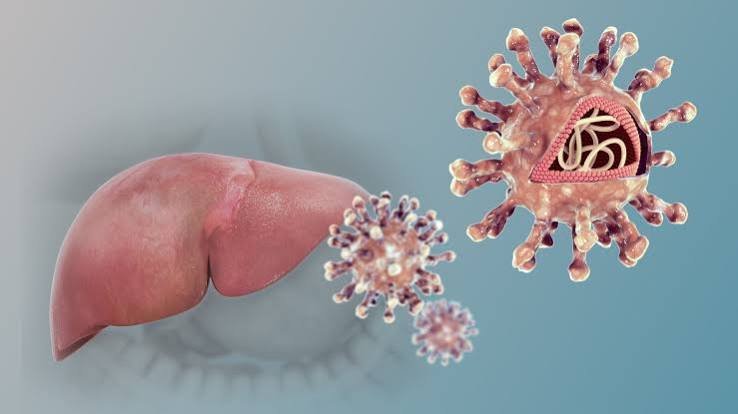
- Data presented at AASLD The Liver Meeting demonstrated 100% of participants (28/28) who completed Week 96 of combination therapy reached undetectable virus (as defined by HDV RNA TND)
- Separate, exploratory analysis suggests curative potential with 10/10 patients who discontinued treatment after at least 96 weeks of undetectable virus showing sustained viral response (SVR) after 12 to 48 weeks of follow-up
- Conference call to discuss topline ECLIPSE 1 results and expanded SOLSTICE data scheduled for November 9, 2026, at 8:30 a.m. ET / 5:30 a.m. PT
-Vir Biotechnology, Inc. announced new, expanded data from the Phase 2 SOLSTICE trial evaluating monthly subcutaneous administration of elebsiran and tobevibart in adults with chronic hepatitis delta (CHD). These data include new analyses presented in oral sessions at the American Association for the Study of Liver Diseases (AASLD) The Liver Meeting® 2026, in Denver, Colorado.
“We are seeing rapid viral suppression that deepens over time, alongside improvement in liver fibrosis and function, giving us a more complete view of what sustained control of HDV could mean for patients,” said Tarik Asselah, M.D., Ph.D., Professor of Hepatology at the Hôpital Beaujon, APHP, Clichy, France, and at the University of Paris-Cité, and Head of the unit Viral Hepatitis UMR1149 at INSERM, France. “Furthermore, the profound antiviral potency with patients achieving virus undetectability provides optimism for the potential of elebsiran and tobevibart to offer finite treatment. As the clinical experience with elebsiran and tobevibart continues to grow, so does our optimism about the possibility to meaningfully change the trajectory of this serious disease.”
Additional Week 96 data from the Phase 2 SOLSTICE trial show that treatment with elebsiran and tobevibart drove rapid HDV RNA suppression, with 100% (28/28) of patients who completed Week 96 of combination therapy reaching undetectable viremia.
Deep virologic response to undetectable levels was accompanied by encouraging findings across measures of liver health. Among patients with paired liver stiffness measurements, 89% (24/27) had improved or stable liver stiffness at Week 96. Liver stiffness is a noninvasive measure associated with liver inflammation and fibrosis, and its improvement or stabilization alongside sustained HDV RNA suppression provides additional insight into the potential impact of treatment on the underlying liver disease.
With extended follow-up, the regimen continued to be generally well-tolerated. Adverse events were mild to moderate with no study drug-related discontinuations or serious adverse events.
SOLSTICE Exploratory Analysis of Finite Treatment
Beyond the expanded SOLSTICE data presented at AASLD, new and early exploratory analyses suggest curative potential of the regimen. The SOLSTICE trial design allows for exploration of the durability of profound viral suppression following treatment discontinuation. Patients who achieve and maintain undetectable virus for at least 96 weeks are eligible to discontinue elebsiran and tobevibart treatment and are followed to assess for sustained viral response (SVR). SVRx is defined at the number of weeks (x) after last dose.
Ten patients, 7 of whom are cirrhotic, chose to discontinue treatment, with follow-up assessment ranging from 12 to 48 weeks as of the data cutoff. All 10 patients achieved SVR12. Among those reaching later follow-up timepoints, 7 achieved SVR24 and 1 achieved SVR48. All 10 patients maintained stable ALT levels following treatment discontinuation with no viral rebound or ALT flares observed in any of the patients. All 10 patients are continuing follow-up to later time points.
“These preliminary findings show the potential for a finite treatment approach that goes beyond suppressing HDV to potentially achieving cure,” said David Liu, Chief Medical Officer of Vir Biotechnology. “For patients who have faced the prospect of living with this chronic disease, that possibility could fundamentally change what is achievable in hepatitis delta.”
The elebsiran and tobevibart regimen is being evaluated in the ECLIPSE registrational program, and the company announced topline Phase 3 results from the pivotal ECLIPSE 1 trial earlier today showing the trial met all of its study endpoints. Data from all three trials will support a comprehensive global regulatory filing package planned for U.S. FDA submission in mid-2027.
The significant unmet need in CHD and the potential for the combination of elebsiran and tobevibart to provide a differentiated treatment option has been recognized by the U.S. Food and Drug Administration (FDA) with Breakthrough Therapy and Fast Track designations, and by the European Medicines Agency (EMA) with Priority Medicines (PRIME) and orphan drug designations.
In December 2025, Vir Biotechnology entered into an exclusive licensing agreement with Norgine, under which Norgine will be responsible for the commercialization of elebsiran and tobevibart in Europe, Australia and New Zealand, subject to receipt of the necessary marketing authorizations.
Most Read
- Can APAC Biomanufacturing Decarbonise Without Pricing Itself Out?
- The Algorithm on the GMP Floor: AI Promises a Smarter Plant. Regulators Demand the Audit Trail.
- APAC's Peptide-Capacity Gamble
- After the Rush: APAC's mRNA and Vaccine Capacity Hangover
- The Biosimilar Race: Factory to the World — or Stuck in the Copycat Economy?
- The Vein-to-Vein Problem: Can APAC's Cold Chain Carry Advanced Therapies?
- Vectors, Plasmids and the CGT Trap: APAC's Cell and Gene Therapy Ambitions Face an Upstream Bottleneck
- Can APAC Build Radioligand Therapy Before the Atoms Decay?
- The Great Biopharma Reset: 50 Developments That Changed Everything in H1 2026
- Beyond the Trial: Can Real-World Evidence Earn Regulatory Trust in APAC?
- Beyond the Obvious Giant: Where APAC's Clinical Trials Go Next
- The Frontier That Won’t Quite Arrive
Bio Jobs
- Sanofi Turns The Page As Belén Garijo Steps In And Paul Hudson Steps Out
- Global Survey Reveals Nearly 40% of Employees Facing Fertility Challenges Consider Leaving Their Jobs
- BioMed X and AbbVie Begin Global Search for Bold Neuroscience Talent To Decode the Biology of Anhedonia
- Thermo Fisher Expands Bengaluru R&D Centre to Advance Antibody Innovation and Strengthen India’s Life Sciences Ecosystem
- Accord Plasma (Intas Group) Acquires Prothya Biosolutions to Expand Global Plasma Capabilities
- ACG Announces $200 Million Investment to Establish First U.S. Capsule Manufacturing Facility in Atlanta
- AstraZeneca Invests $4.5 Billion to Build Advanced Manufacturing Facility in Virginia, Expanding U.S. Medicine Production
News


