Ascletis’ Oral GLP-1 ASC30 Delivers Up to 1.7% HbA1c Reduction in Phase II Diabetes Trial
30 October 2026 | Friday | News
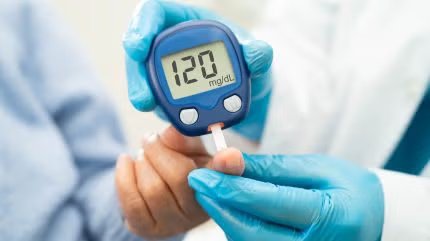
- ASC30 reduced HbA1c by a placebo-adjusted 1.7%, 1.6% and 1.7% from baseline for 40 mg, 60 mg and 80 mg, respectively, at 12 weeks, the primary endpoint.
- ASC30 achieved placebo-adjusted weight reduction of 4.4%, 3.8% and 4.0% from baseline for 40 mg, 60 mg and 80 mg, respectively and no plateau was observed, at 13 weeks, a secondary endpoint.
- ASC30 titrated weekly to maintenance doses (40 mg, 60 mg and 80 mg) demonstrated favorable safety and tolerability, with zero study discontinuations due to gastrointestinal adverse events.
- No hepatic safety signal was observed.
Ascletis Pharma Inc. (HKEX: 1672, "Ascletis") announces positive topline results from its U.S. Phase II study (NCT07321678) evaluating ASC30, an oral small molecule GLP-1 receptor (GLP-1R) agonist, for the treatment of type 2 diabetes mellitus (T2D). This Phase II study is a 13-week U.S. study evaluating the efficacy, safety and tolerability of oral small molecule GLP-1R agonist ASC30, a once-daily tablet, in 100 participants with diabetes. The primary endpoint is HbA1c reduction from baseline at 12 weeks; one of the secondary endpoints are body weight loss from baseline at 13 weeks. ASC30 (40 mg, 60 mg, 80 mg) met the primary and all secondary endpoints, delivering significant HbA1C reduction and weight loss as well as improvements in multiple cardiovascular risk factors. T2D is the second indication in development for ASC30, in addition to obesity.
For the primary endpoint, ASC30 demonstrated statistically significant and clinically meaningful HbA1c reduction in participants with diabetes compared to placebo (p < 0.0001). Placebo-adjusted HbA1c reductions from baseline were 1.7%, 1.6% and 1.7% (least squares mean) for 40 mg (n=20), 60 mg (n=29) and 80 mg (n=28), respectively, at 12 weeks, using the efficacy estimand[1]. Participants had an average HbA1c of 8.3% at baseline.
For the secondary endpoint of body weight reduction, ASC30 demonstrated statistically significant and clinically meaningful body weight reduction compared to placebo (p = 0.001 to 0.003). Placebo-adjusted body weight reduction from baseline was 4.4%, 3.8% and 4.0% (least squares mean) for 40 mg (n=20), 60 mg (n=29) and 80 mg (n=28), respectively and no plateau was observed, at 13 weeks, using the efficacy estimand. Participants had an average body weight of 93.7 kg at baseline.
Although titration (once weekly) was fast in the study, ASC30 continued to demonstrate favorable gastrointestinal (GI) tolerability. ASC30 titrated weekly to maintenance doses (40 mg, 60 mg and 80 mg) demonstrated favorable safety and GI tolerability, with zero study discontinuations due to GI adverse events (AEs). The favorable GI tolerability in diabetic participants was consistent with the finding from studies in obese or overweight participants. It is anticipated that GI tolerability will significantly improve in the Phase III diabetic program when titration is slowed down to once every four weeks. There was only one study discontinuation (1/80, 1.3%, hiccup) due to any AEs. The placebo group had zero study discontinuation due to any AEs.
In this ASC30 U.S. Phase II diabetic study, all drug-related AEs were only grade 1 (mild) and grade 2 (moderate) in severity. There were no drug-related serious AEs (SAEs).
The overall safety profile of ASC30 in diabetic participants was consistent with that observed in another Phase II study (NCT07002905) in participants with obesity or overweight. No hepatic safety signal was observed. There were no elevations of alanine transaminase (ALT), aspartate aminotransferase (AST), or total bilirubin (TBL) during the treatment period. For all other safety signals, ASC30 demonstrated a favorable safety profile in diabetic participants.
"These data demonstrate that ASC30 has the potential to be a best-in-class oral small molecule GLP-1 for diabetes, in addition to a best-in-class oral small molecule GLP-1 for obesity as demonstrated by the efficacy and tolerability from our U.S. Phase II study in participants with obesity or overweight," said Jinzi Jason Wu, Ph.D., Founder, Chairman and CEO of Ascletis, "The combination of significant HbA1c reductions, weight loss and favorable tolerability reinforces our confidence in advancing ASC30 as a once-daily oral treatment option for patients with type 2 diabetes."
ASC30 was discovered and developed in-house at Ascletis as an investigational small molecule GLP-1R fully biased agonist. The ASC30 global Phase III program for obesity has two pivotal trials (AURORA-1 NCT07743463 and AURORA-2 NCT07743450) in the U.S., Europe, and Canada and is currently enrolling approximately 4,600 participants with obesity or overweight. Topline data from the ASC30 global Phase III clinical program for obesity are expected in the third quarter of 2028, with a U.S. Food and Drug Administration (FDA) New Drug Application (NDA) submission for obesity expected by the end of 2028 and a European Medicines Agency (EMA) Marketing Authorisation Application (MAA) submission for obesity expected in early 2029. ASC30 has the potential to become the second oral small molecule GLP-1 receptor agonist available in the U.S. and Europe, if approved.
[1] The efficacy estimand is the primary estimand which evaluates the treatment effect of all randomized eligible participants while adhering to treatment.
Most Read
- Can APAC Biomanufacturing Decarbonise Without Pricing Itself Out?
- The Algorithm on the GMP Floor: AI Promises a Smarter Plant. Regulators Demand the Audit Trail.
- APAC's Peptide-Capacity Gamble
- After the Rush: APAC's mRNA and Vaccine Capacity Hangover
- The Biosimilar Race: Factory to the World — or Stuck in the Copycat Economy?
- The Vein-to-Vein Problem: Can APAC's Cold Chain Carry Advanced Therapies?
- Vectors, Plasmids and the CGT Trap: APAC's Cell and Gene Therapy Ambitions Face an Upstream Bottleneck
- Can APAC Build Radioligand Therapy Before the Atoms Decay?
- The Great Biopharma Reset: 50 Developments That Changed Everything in H1 2026
- Beyond the Trial: Can Real-World Evidence Earn Regulatory Trust in APAC?
- Beyond the Obvious Giant: Where APAC's Clinical Trials Go Next
- The Frontier That Won’t Quite Arrive
Bio Jobs
- Sanofi Turns The Page As Belén Garijo Steps In And Paul Hudson Steps Out
- Global Survey Reveals Nearly 40% of Employees Facing Fertility Challenges Consider Leaving Their Jobs
- BioMed X and AbbVie Begin Global Search for Bold Neuroscience Talent To Decode the Biology of Anhedonia
- Thermo Fisher Expands Bengaluru R&D Centre to Advance Antibody Innovation and Strengthen India’s Life Sciences Ecosystem
- Accord Plasma (Intas Group) Acquires Prothya Biosolutions to Expand Global Plasma Capabilities
- ACG Announces $200 Million Investment to Establish First U.S. Capsule Manufacturing Facility in Atlanta
- AstraZeneca Invests $4.5 Billion to Build Advanced Manufacturing Facility in Virginia, Expanding U.S. Medicine Production
News