Seegene Advances Comprehensive HPV and STI PCR Testing with Large-Scale Clinical Evidence
29 July 2026 | Wednesday | News
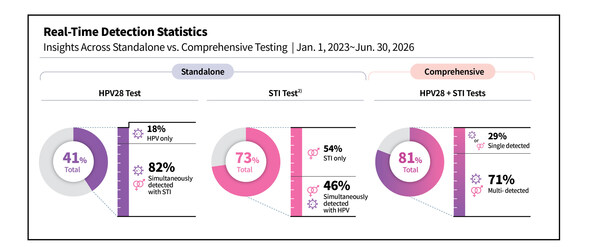
- STAgora™ analysis of approximately 60,000 test results collected over 42 months showed that STI pathogens were detected in 82% of HPV-positive cases
- Findings support the potential value of a comprehensive testing approach that provides both HPV and STI pathogen information
- Seegene to validate the clinical utility of comprehensive HPV & STI testing through the Global Million Clinical Study and establish scientific evidence for new global standards of PCR testing
Seegene Inc., a global molecular diagnostics company, announced a comprehensive syndromic PCR-based testing approach for reproductive tract infections (RTIs) through the simultaneous detection of sexually transmitted infections (STIs) and human papillomavirus (HPV).
The announcement follows Seegene's launch of the Global Million Clinical Study (GMCS) on July 8. The initiative aims to generate scientific evidence for Global New Standard of PCR testing by accumulating real-world clinical data from healthcare institutions worldwide and evaluating the clinical utility of disease-specific diagnostic testing strategies.
HPV is widely recognized as the primary cause of cervical cancer, and certain high-risk genotypes, particularly HPV-16 and HPV-18, are closely associated with disease progression. Because screening and follow-up strategies may vary depending on the HPV genotype detected, identifying not only the presence of HPV but also the genotype provides important clinical information for patient management.
STIs are caused by a variety of pathogens, including Chlamydia trachomatis and Neisseria gonorrhoeae. They may present with a broad range of symptoms, including abnormal discharge, dysuria, genital pain or itching, dyspareunia, lower abdominal pain, genital ulcers, vesicles or warts, and infertility. Because different pathogens often cause similar clinical symptoms, identifying the causative pathogen with symptoms alone may be difficult. In addition, asymptomatic infections are common and may contribute to unrecognized transmission.
Recent studies have suggested that STIs and vaginal dysbiosis may be associated with changes in the local inflammatory, immune, and microbial environment of the cervix, potentially influencing HPV acquisition, persistence, or clearance. This growing body of evidence underscores the importance of interpreting HPV and STI findings within the broader clinical context – including the patient's age, symptoms, sexual history and exposure risk, pregnancy plan, prior infection history and the specific organism detected. Together, these findings provide a scientific rationale for further evaluating a comprehensive HPV and STI testing approach that assesses HPV risk alongside concurrent sexually transmitted and reproductive tract infections.
Using STAgora™, Seegene's real-time test data analytics and statistical platform, the company internally analyzed approximately 60,000 HPV & STI co-testing results generated over a 42-month period. The analysis showed that STI pathogens were detected in 82% of HPV-positive cases, while HPV was detected in 46% of STI-positive cases. In addition, co-detection of HPV and STI pathogens was observed in 71% of positive cases identified through comprehensive HPV & STI testing.
These findings demonstrate the potential application of concurrent STI testing with HPV screening. The promising applications may include identifying asymptomatic STIs, assessing co-infections in HPV-positive individuals, and supporting reproductive health evaluations during pregnancy planning or infertility assessment.
Through GMCS, Seegene plans to continue accumulating clinical evidence on comprehensive HPV & STI testing and to statistically evaluate its clinical utility and applicability using STAgora™.
Most Read
- Can APAC Biomanufacturing Decarbonise Without Pricing Itself Out?
- The Algorithm on the GMP Floor: AI Promises a Smarter Plant. Regulators Demand the Audit Trail.
- APAC's Peptide-Capacity Gamble
- After the Rush: APAC's mRNA and Vaccine Capacity Hangover
- The Biosimilar Race: Factory to the World — or Stuck in the Copycat Economy?
- The Vein-to-Vein Problem: Can APAC's Cold Chain Carry Advanced Therapies?
- Vectors, Plasmids and the CGT Trap: APAC's Cell and Gene Therapy Ambitions Face an Upstream Bottleneck
- Can APAC Build Radioligand Therapy Before the Atoms Decay?
- The Great Biopharma Reset: 50 Developments That Changed Everything in H1 2026
- Beyond the Trial: Can Real-World Evidence Earn Regulatory Trust in APAC?
- Beyond the Obvious Giant: Where APAC's Clinical Trials Go Next
- The Frontier That Won’t Quite Arrive
Bio Jobs
- Sanofi Turns The Page As Belén Garijo Steps In And Paul Hudson Steps Out
- Global Survey Reveals Nearly 40% of Employees Facing Fertility Challenges Consider Leaving Their Jobs
- BioMed X and AbbVie Begin Global Search for Bold Neuroscience Talent To Decode the Biology of Anhedonia
- Thermo Fisher Expands Bengaluru R&D Centre to Advance Antibody Innovation and Strengthen India’s Life Sciences Ecosystem
- Accord Plasma (Intas Group) Acquires Prothya Biosolutions to Expand Global Plasma Capabilities
- ACG Announces $200 Million Investment to Establish First U.S. Capsule Manufacturing Facility in Atlanta
- AstraZeneca Invests $4.5 Billion to Build Advanced Manufacturing Facility in Virginia, Expanding U.S. Medicine Production
News