Roche Secures FDA Clearance For Cobas c 703 And Cobas ISE Neo Analytical Units
01 April 2026 | Wednesday | News
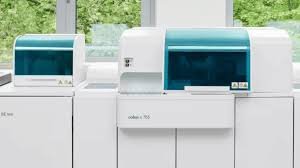
- The cobas® c 703 and cobas® ISE neo analytical units deliver higher testing capacity and increased automation, helping to improve laboratory workflows and advance patient care.
- High-throughput efficiency, with up to 2,000 tests per hour on cobas® c 703 and up to 70 reagent positions for testing optimization.
- The new cobas® ISE neo analytical unit delivers up to 1,800 tests per hour and reduces hands-on time through automated maintenance.
Roche announced the U.S. Food and Drug Administration (FDA) 510(k) clearance of its newest analytical units – the cobas® c 703 and cobas® ISE neo. As part of the scalable and modular cobas® pro integrated solutions, these additions deliver advanced lab-automation capabilities designed to help address some of today's most pressing laboratory challenges, including staff shortages, limited space and growing test volumes.
"Laboratories are the indispensable engine of modern healthcare, and Roche wants to partner in addressing staffing-shortage challenges and an ever-increasing demand for testing," said Brad Moore, President and CEO of Roche Diagnostics North America. "Roche is investing in solutions that help labs process more samples than ever – without sacrificing performance. The high-volume clinical chemistry and enhanced automation of the cobas® c 703 and cobas® ISE neo analytical units will streamline workflows, one test at a time."
These new units reflect Roche's commitment to leading with science and delivering transformative diagnostic solutions that simplify operations and support faster clinical decision-making. With more than 4,000 cobas® analyzers installed across the U.S., Roche provides laboratories with a standardized platform capable of scaling access to testing quickly and effectively.
cobas® c 703 analytical unit
The new cobas® c 703 is engineered to double the clinical chemistry throughput1 on cobas® pro integrated solutions, delivering up to 2,000 tests per hour and 70 reagent positions. Its expanded reagent capacity enables more high-value tests to run continuously, reducing reagent reloads and improving workflow efficiency. Monthly operator maintenance further enhances uptime and productivity.
cobas® ISE neo analytical unit
The cobas® ISE neo analytical unit, with up to 1,800 tests per hour, delivers more efficient ISE testing, reducing hands-on time through automated maintenance. The cobas® ISE neo system delivers more tests per reagent bottle, minimizing plastic waste and reducing logistical efforts compared to previous-generation systems. Monthly maintenance supports consistent uptime, helping laboratories manage higher volumes with fewer manual steps.
Together, these units automate tasks traditionally performed manually, supporting laboratories facing staffing shortages while increasing test capacity and accelerating turnaround times.
Most Read
- Can APAC Biomanufacturing Decarbonise Without Pricing Itself Out?
- The Algorithm on the GMP Floor: AI Promises a Smarter Plant. Regulators Demand the Audit Trail.
- APAC's Peptide-Capacity Gamble
- After the Rush: APAC's mRNA and Vaccine Capacity Hangover
- The Biosimilar Race: Factory to the World — or Stuck in the Copycat Economy?
- The Vein-to-Vein Problem: Can APAC's Cold Chain Carry Advanced Therapies?
- Vectors, Plasmids and the CGT Trap: APAC's Cell and Gene Therapy Ambitions Face an Upstream Bottleneck
- Can APAC Build Radioligand Therapy Before the Atoms Decay?
- The Great Biopharma Reset: 50 Developments That Changed Everything in H1 2026
- Beyond the Trial: Can Real-World Evidence Earn Regulatory Trust in APAC?
- Beyond the Obvious Giant: Where APAC's Clinical Trials Go Next
- The Frontier That Won’t Quite Arrive
Bio Jobs
- Sanofi Turns The Page As Belén Garijo Steps In And Paul Hudson Steps Out
- Global Survey Reveals Nearly 40% of Employees Facing Fertility Challenges Consider Leaving Their Jobs
- BioMed X and AbbVie Begin Global Search for Bold Neuroscience Talent To Decode the Biology of Anhedonia
- Thermo Fisher Expands Bengaluru R&D Centre to Advance Antibody Innovation and Strengthen India’s Life Sciences Ecosystem
- Accord Plasma (Intas Group) Acquires Prothya Biosolutions to Expand Global Plasma Capabilities
- ACG Announces $200 Million Investment to Establish First U.S. Capsule Manufacturing Facility in Atlanta
- AstraZeneca Invests $4.5 Billion to Build Advanced Manufacturing Facility in Virginia, Expanding U.S. Medicine Production
News