Ommo Technologies Raises Series A to Scale Spatial Intelligence Platform for Physical AI
13 August 2026 | Thursday | News
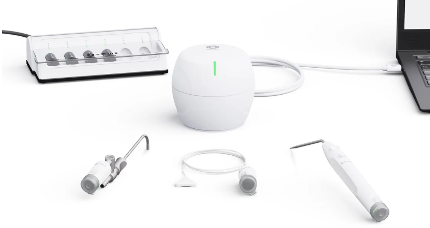
Image 1: Ommo wireless sensors and consumables, dexterous hand solutions
VMS Group, a global alternative investment specialist, announced that its portfolio company, Ommo Technologies (Ommo), a spatial intelligence technology company, has completed a Series A financing round of tens of millions in USD. The financing round is co-led by VMS Group and a prominent fund, with participation from Bayland Capital. DAS Capital served as Ommo's long-term exclusive financial advisor throughout the transaction.
Raised capital will be primarily used to advance the ongoing technological development of the company’s core spatial intelligence platform and its mass production capabilities. The company will continue to expand the system’s applications across embodied intelligence, advanced manufacturing, and medical surgery use cases.
Spatial Data Becomes a Foundational Layer for Physical AI
As AI expands from the digital realm into the physical world, competition in the robotics industry is shifting from isolated task demonstrations to reliable execution across diverse real-world environments. In delicate operations such as grasping, plugging, and assembly, even minor deviations in position or orientation can be amplified upon contact, resulting in slippage, jamming, or task failure. Strategies that perform well in simulation often encounter new challenges in real-world deployment due to occlusion, deformation, mechanical tolerances, and variations in physical environments.
High-quality spatial data is a critical foundation for enabling embodied AI and physical AI to achieve reliable real-world applications. While sensing modalities such as vision, force, and touch each provide valuable information from different dimensions, model training and robot deployment also require a shared spatial reference framework that spans the entire interaction process. Such a framework continuously captures the true position, orientation, and motion trajectory of objects, aligning human demonstrations, simulation-based training, real-world execution, and performance evaluation within a unified coordinate system to improve accuracy and consistency.
From 3D Tracking to the Ultimate Spatial Intelligence Platform
Built on its proprietary permanent magnet-based spatial sensing technology, Ommo has developed a 3D tracking platform that integrates base stations, miniature sensors, and real-time processing software to continuously deliver precise six-degree-of-freedom (6DoF) position and orientation data. With no direct line of sight required, the platform enables reliable spatial awareness in complex environments. Its sensors can also be embedded into robotic end-effectors, wearable devices, and medical instruments, making the technology ideally suited for confined, obstructed, and highly interactive settings where continuous, accurate, and real-time spatial intelligence is critical.
Ommo has been a pioneer in product validation and industry collaboration in highly demanding applications such as surgical navigation, where precision, reliability, and miniaturization are critical requirements. Building on the proven capabilities of its core technology, the company has extended the same platform to robotics and industrial applications. In embodied AI scenarios, Ommo's solution supports human demonstration trajectory capture, robot calibration, workflow annotation, and performance evaluation, establishing a unified spatial benchmark across training data, simulation environments, and real-world execution. This common spatial reference framework helps improve the accuracy, consistency, and reliability of AI-driven robotic systems. In advanced manufacturing, the platform's capabilities can be applied to precision measurement, quality assurance, and automated operations, enabling higher levels of process control and operational efficiency.
Ommo's leadership team combines deep international experience with a strong track record of platform development and technology commercialization. Several senior executives are serial entrepreneurs and former leaders at global technology companies, including Apple, Samsung, LG, and Riot Games. The team brings extensive expertise spanning large-scale software platforms, precision hardware development, and the management of globally distributed R&D organizations. Collectively, they have led the development, validation, and mass production of hundreds of products. This multidisciplinary expertise enables seamless collaboration across magnetic field design, miniature sensors, spatial computing algorithms, embedded systems, precision engineering, manufacturing testing, and quality management, allowing Ommo to integrate continuous measurement, real-time feedback, and physical interaction into an embedded and scalable spatial intelligence infrastructure for next-generation medical devices, robotics, and intelligent machines.
Minjie Zheng, Founder of Ommo, stated: " As machines move into the physical world, spatial information will become a shared foundational language for intelligent systems, just as time and coordinates are today. At Ommo, we aim to bring continuous, precise, and embeddable spatial sensing capabilities to a new generation of intelligent devices, enabling robots, medical equipment, and industrial systems to develop a spatial understanding of the three-dimensional world and continuously perceive, interpret, and act through real-world interactions. This round of financing will support the advancement of our core technologies and mass-production platform while strengthening collaboration with industry partners to make spatial intelligence a foundational infrastructure layer connecting the physical world and machine intelligence."
Andrew Ng, Partner and Head of Healthcare at VMS Group, spotlighted: "Achieving precision, compact form factors, and environmental adaptability simultaneously is a significant technical challenge. Ommo has successfully integrated these capabilities into a robust spatial sensing solution that has been proven in demanding applications such as surgical navigation, where tolerance for error is extremely low. The challenges faced by robotic end-effectors in tasks such as grasping, insertion, and assembly, including occlusion, confined spaces, and continuous physical interaction, closely resemble those encountered in surgical navigation.”
“Over years of real-world deployment, Ommo has built sophisticated calibration algorithms and accumulated valuable spatial data assets that represent a deeper competitive moat than hardware alone. We look forward to partnering with Ommo over the long term as it brings precise spatial intelligence capabilities to a broader range of industries and helps accelerate the development of Embodied AI," added Ng.
Most Read
- Can APAC Biomanufacturing Decarbonise Without Pricing Itself Out?
- The Algorithm on the GMP Floor: AI Promises a Smarter Plant. Regulators Demand the Audit Trail.
- APAC's Peptide-Capacity Gamble
- After the Rush: APAC's mRNA and Vaccine Capacity Hangover
- The Biosimilar Race: Factory to the World — or Stuck in the Copycat Economy?
- The Vein-to-Vein Problem: Can APAC's Cold Chain Carry Advanced Therapies?
- Vectors, Plasmids and the CGT Trap: APAC's Cell and Gene Therapy Ambitions Face an Upstream Bottleneck
- Can APAC Build Radioligand Therapy Before the Atoms Decay?
- The Great Biopharma Reset: 50 Developments That Changed Everything in H1 2026
- Beyond the Trial: Can Real-World Evidence Earn Regulatory Trust in APAC?
- Beyond the Obvious Giant: Where APAC's Clinical Trials Go Next
- The Frontier That Won’t Quite Arrive
Bio Jobs
- Sanofi Turns The Page As Belén Garijo Steps In And Paul Hudson Steps Out
- Global Survey Reveals Nearly 40% of Employees Facing Fertility Challenges Consider Leaving Their Jobs
- BioMed X and AbbVie Begin Global Search for Bold Neuroscience Talent To Decode the Biology of Anhedonia
- Thermo Fisher Expands Bengaluru R&D Centre to Advance Antibody Innovation and Strengthen India’s Life Sciences Ecosystem
- Accord Plasma (Intas Group) Acquires Prothya Biosolutions to Expand Global Plasma Capabilities
- ACG Announces $200 Million Investment to Establish First U.S. Capsule Manufacturing Facility in Atlanta
- AstraZeneca Invests $4.5 Billion to Build Advanced Manufacturing Facility in Virginia, Expanding U.S. Medicine Production
News