Peptide vs Protein vs Amino Acid: What Is the Difference?
06 October 2026 | Tuesday | News
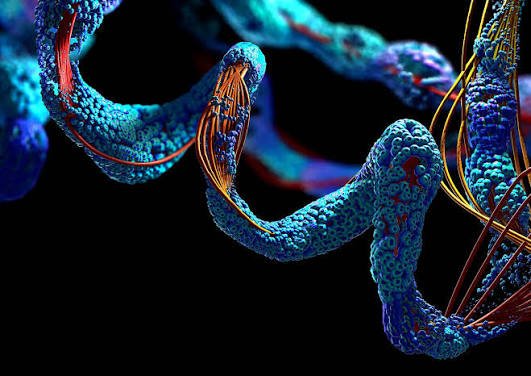
So what is the real answer to the peptide vs protein question? It mostly comes down to size and shape. A peptide is a short chain of amino acids. A protein is a much longer chain that folds into a detailed 3D shape.
An easy way to remember it:
- Amino acids are like letters.
- Peptides are like short words.
- Proteins are like whole stories.
What Is an Amino Acid?
An amino acid is a single building block. Living things use about 20 standard amino acids to make their proteins.
Every amino acid has three main parts:
- An amino group: a small cluster of atoms containing nitrogen (the "amino" in the name)
- A carboxyl group: a cluster of atoms that makes the molecule slightly acidic (the "acid")
- A side chain (R group): the part that changes from one amino acid to the next and decides how each one behaves
Glycine is the simplest example. Its side chain is just one hydrogen atom.
What Is a Peptide?
Once two or more amino acids link up, you have a peptide. Most peptides are 2 to 50 amino acids long, according to the National Human Genome Research Institute.
How a Peptide Bond Forms
The link between amino acids is called a peptide bond. It forms when the carboxyl group of one amino acid joins the amino group of the next, pushing out a tiny water molecule. Repeat that, and the chain keeps growing.
The order of amino acids in the chain is its sequence. It works like spelling: swap one letter and you get a different word.
Peptides are also named by length:
- Dipeptide: 2 amino acids
- Tripeptide: 3 amino acids
- Oligopeptide: a few, often up to about 20
- Polypeptide: a long chain
Glutathione, for example, is a natural tripeptide made of glutamic acid, cysteine and glycine.
In living things, many peptides act as messengers between cells. So, are peptides amino acids? Not quite. They are made from amino acids, the way a word is made from letters.
What Is a Polypeptide?
A polypeptide is simply a long peptide chain, but nobody fully agrees on where "long" begins. NCBI StatPearls says more than 20 amino acids, the National Human Genome Research Institute says 51 or more, and the University of Queensland says 10 or more.
Is a polypeptide a protein? Not always. It becomes one only when it folds into a stable, working shape.
What Is a Protein?
A protein is one or more long polypeptide chains folded into a specific 3D shape. That shape decides what the protein can do, much like the shape of a key decides which lock it opens.
Proteins do many jobs: enzymes speed up chemical reactions, hemoglobin carries oxygen in the blood, and structural proteins give cells their strength.
The Four Levels of Protein Structure
|
Level |
What it means |
Everyday comparison |
|
Primary |
The order of amino acids |
Beads on a string |
|
Secondary |
Local coils and folded sheets |
A spring or a paper fan |
|
Tertiary |
The whole chain folded into one 3D shape |
A scrunched-up ball |
|
Quaternary |
Several folded chains working as one unit |
Balls locked together |
Hemoglobin, for example, has four chains: two with 141 amino acids and two with 146.
Because shape matters so much, proteins can be fragile. Heat or a change in acidity can make them unfold and stop working. This is called denaturation, and you have seen it if you have ever cooked an egg: the clear egg white turns solid and white.
Peptide vs Protein vs Amino Acid: Key Differences at a Glance
|
Feature |
Amino acid |
Peptide |
Protein |
|
What it is |
A single building block |
A short chain |
One or more long, folded chains |
|
Size |
1 unit |
Usually 2 to 50 |
Usually 50+, often hundreds |
|
Structure |
Simple |
Simple, flexible |
Complex 3D shape |
|
Typical role |
Raw material |
Messenger |
Reactions, transport, structure |
|
Example |
Glycine (1) |
Glutathione (3) |
Hemoglobin (574) |
Where Does a Peptide End and a Protein Begin?
Most sources draw the line at about 50 amino acids, but it is a rule of thumb, not a strict cut-off. Some scientists set it as high as 100.
Take ubiquitin. It has only 76 amino acids, yet it is called a protein because it folds into a stable, compact shape. Found in almost every cell, it tags other proteins for recycling.
Why the Difference Matters in Research Labs
In a lab, the difference changes how a molecule is made and how its quality is checked.
How Each One Is Made
- Peptides are usually built with chemistry. In solid-phase peptide synthesis, the first amino acid is attached to tiny resin beads and the rest are added one at a time. Bruce Merrifield developed this method and won the 1984 Nobel Prize in Chemistry for it. It works best for shorter chains, since errors become more likely past about 50 amino acids.
- Proteins are usually made by living cells. Scientists give bacteria or yeast the genetic instructions, and the cells do the building. This is called recombinant production.
How Each One Is Checked
- HPLC (high-performance liquid chromatography) checks purity. The sample is pushed through a packed tube, where different molecules move at different speeds and separate. On the chart, the tallest peak is the target peptide and smaller peaks are impurities.
- Mass spectrometry checks identity. It weighs the molecule very precisely. A matching weight confirms you have the right molecule, a bit like weighing a parcel to check it matches the label.
Proteins also need their folded shape confirmed, since the right sequence in the wrong shape may not work.
What Researchers Look For When Sourcing
Most researchers start by asking for a Certificate of Analysis (COA), a document showing the test data for one specific batch, including HPLC purity and mass spectrometry figures. They also check for clear research-use-only labeling. If you are comparing suppliers of lab-tested research peptides, it is worth asking for the batch COA before placing an order.
Final Thoughts
Amino acids are single building blocks, peptides are short chains of them, and proteins are long chains folded into working shapes. For researchers, knowing which is which also shapes how each molecule is made, tested and sourced.
Research use notice: Any peptides or amino acids referred to in this article are sold for laboratory research use only. They are not for human or veterinary use. This article is for educational purposes and is not medical advice.
Most Read
- Can APAC Biomanufacturing Decarbonise Without Pricing Itself Out?
- The Algorithm on the GMP Floor: AI Promises a Smarter Plant. Regulators Demand the Audit Trail.
- APAC's Peptide-Capacity Gamble
- After the Rush: APAC's mRNA and Vaccine Capacity Hangover
- The Biosimilar Race: Factory to the World — or Stuck in the Copycat Economy?
- The Vein-to-Vein Problem: Can APAC's Cold Chain Carry Advanced Therapies?
- Vectors, Plasmids and the CGT Trap: APAC's Cell and Gene Therapy Ambitions Face an Upstream Bottleneck
- Can APAC Build Radioligand Therapy Before the Atoms Decay?
- The Great Biopharma Reset: 50 Developments That Changed Everything in H1 2026
- Beyond the Trial: Can Real-World Evidence Earn Regulatory Trust in APAC?
- Beyond the Obvious Giant: Where APAC's Clinical Trials Go Next
- The Frontier That Won’t Quite Arrive
Bio Jobs
- Sanofi Turns The Page As Belén Garijo Steps In And Paul Hudson Steps Out
- Global Survey Reveals Nearly 40% of Employees Facing Fertility Challenges Consider Leaving Their Jobs
- BioMed X and AbbVie Begin Global Search for Bold Neuroscience Talent To Decode the Biology of Anhedonia
- Thermo Fisher Expands Bengaluru R&D Centre to Advance Antibody Innovation and Strengthen India’s Life Sciences Ecosystem
- Accord Plasma (Intas Group) Acquires Prothya Biosolutions to Expand Global Plasma Capabilities
- ACG Announces $200 Million Investment to Establish First U.S. Capsule Manufacturing Facility in Atlanta
- AstraZeneca Invests $4.5 Billion to Build Advanced Manufacturing Facility in Virginia, Expanding U.S. Medicine Production
News