How Is Connected Care Reaching Patients at Home?
27 July 2026 | Monday | News
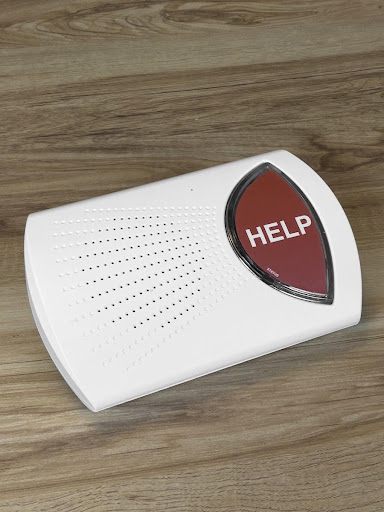
At the edge of this trend sit simple connected safety devices that keep patients linked to help. To see how that works in practice, learn more about home emergency call buttons and how they fit a wider care plan. This article explains how connected care is reaching patients at home.
What Is Driving the Shift to Home Care?
The momentum is hard to overstate. Connected care is the delivery of health services and monitoring through digital devices that link patients to providers and help. It moves support out of the clinic.
Demographics push it forward. Aging populations across many regions mean more people managing long-term conditions at home. Almost 9 in 10 older adults say they want to stay in their own homes as they age.
Investment follows the need. The latest biotech and life sciences trends show capital flooding into remote monitoring, wearables, and telemedicine. The money is chasing a genuine change in how care works, not just a passing fashion. When funding, demographics, and technology point the same direction at once, the shift tends to stick and accelerate rather than fade.
How Does Remote Monitoring Work?
The technology is now mature. Remote patient monitoring uses connected devices to track health data and send it to providers or caregivers. It turns a home into a safe extension of the clinic.
Data flows continuously. Wearables and sensors can track heart rate, activity, and falls, flagging problems before they become emergencies. Regional digital health trends point to this becoming standard across care pathways.
Standards keep it safe. Guidance from the FDA on digital health sets out how these tools are assessed. Oversight is what turns promising gadgets into trusted medical tools.
Where Do Emergency Devices Fit In?
Not all connected care is complex. Some of the most valuable devices are also the simplest. An emergency call button is a clear example.
The value is immediacy. A personal alarm or call button lets a patient summon help instantly, even when no monitoring system predicts the event. It covers the sudden fall or turn that data alone can miss, and it gives both patients and their families a genuine sense of security between check-ins.
Simplicity drives adoption. Research on connected health, such as this review of digital health and biotelemetry, notes that easy-to-use devices see far higher real-world uptake. The best tool is the one a patient will actually use every day.
What Does This Mean for the Industry?
The care model itself is changing. Providers, insurers, and device makers are all adapting to a home-centered model. The ripple effects reach the whole sector.
New partnerships are forming. Pharmaceutical and technology firms increasingly collaborate on connected tools, one of many developments reshaping the field this year. The lines between drug, device, and service keep blurring, and companies that once sold only medicines now find themselves shipping software and hardware too.
Patients gain the most. Better monitoring and faster help mean more people stay safe and independent for longer, with fewer avoidable hospital visits. That outcome, more than any single technology, is the real measure of progress, and it is what keeps the whole model moving forward.
What Should Buyers and Providers Prioritize?
Technology alone is not enough. The right choices make connected care actually work. A few priorities stand out.
- Reliability. Devices must work every time, not most of the time.
- Simplicity. Easy setup and daily use drive real adoption.
- Integration. Tools should fit existing care and data systems.
- Support. Human help matters when technology reaches its limits.
Match the tool to the person. A sophisticated platform is useless if a patient finds it confusing, while a simple call button can be life-changing. Fit and usability beat feature lists every time.
What to Keep In Mind
- Connected care is moving monitoring and help into the home.
- Aging populations and investment are driving the shift.
- Remote monitoring tracks health data and flags problems early.
- Simple devices like emergency call buttons cover sudden events.
- The industry is realigning around a home-centered care model.
- Prioritize reliability, simplicity, integration, and support.
Bringing Care Closer to Home
Connected care is quietly transforming how patients live with health conditions, moving support from the clinic into daily life. From advanced remote monitoring to a simple emergency call button, these tools help people stay safe and independent for longer. For an industry built on improving lives, that is a shift genuinely worth getting right, and the momentum behind it shows no sign of slowing.
FAQ
What Is Connected Care?
It is the delivery of health services and monitoring through digital devices that link patients to providers and help. It ranges from remote monitoring platforms to simple emergency call buttons. The goal is safer, more independent care at home.
How Does Remote Patient Monitoring Help?
It tracks health data like heart rate, activity, and falls, sending alerts to caregivers or providers so problems are caught early. This can prevent emergencies and hospital visits. It effectively extends clinical oversight into the home.
Are Simple Devices Like Call Buttons Still Useful?
Very. They cover sudden events, such as a fall, that predictive monitoring can miss, letting a patient summon help instantly. Their simplicity also means high real-world adoption. Often the simplest device delivers the most value.
What Should I Look for In a Connected Care Device?
Prioritize reliability, ease of use, integration with existing systems, and strong human support. A device only helps if a patient will actually use it daily. Fit and usability matter more than a long feature list.
Most Read
- Can APAC Biomanufacturing Decarbonise Without Pricing Itself Out?
- The Algorithm on the GMP Floor: AI Promises a Smarter Plant. Regulators Demand the Audit Trail.
- APAC's Peptide-Capacity Gamble
- After the Rush: APAC's mRNA and Vaccine Capacity Hangover
- The Biosimilar Race: Factory to the World — or Stuck in the Copycat Economy?
- The Vein-to-Vein Problem: Can APAC's Cold Chain Carry Advanced Therapies?
- Vectors, Plasmids and the CGT Trap: APAC's Cell and Gene Therapy Ambitions Face an Upstream Bottleneck
- Can APAC Build Radioligand Therapy Before the Atoms Decay?
- The Great Biopharma Reset: 50 Developments That Changed Everything in H1 2026
- Beyond the Trial: Can Real-World Evidence Earn Regulatory Trust in APAC?
- Beyond the Obvious Giant: Where APAC's Clinical Trials Go Next
- The Frontier That Won’t Quite Arrive
Bio Jobs
- Sanofi Turns The Page As Belén Garijo Steps In And Paul Hudson Steps Out
- Global Survey Reveals Nearly 40% of Employees Facing Fertility Challenges Consider Leaving Their Jobs
- BioMed X and AbbVie Begin Global Search for Bold Neuroscience Talent To Decode the Biology of Anhedonia
- Thermo Fisher Expands Bengaluru R&D Centre to Advance Antibody Innovation and Strengthen India’s Life Sciences Ecosystem
- Accord Plasma (Intas Group) Acquires Prothya Biosolutions to Expand Global Plasma Capabilities
- ACG Announces $200 Million Investment to Establish First U.S. Capsule Manufacturing Facility in Atlanta
- AstraZeneca Invests $4.5 Billion to Build Advanced Manufacturing Facility in Virginia, Expanding U.S. Medicine Production
News