Leading the Future of Care: Patient Organizations Driving Health System Transformation
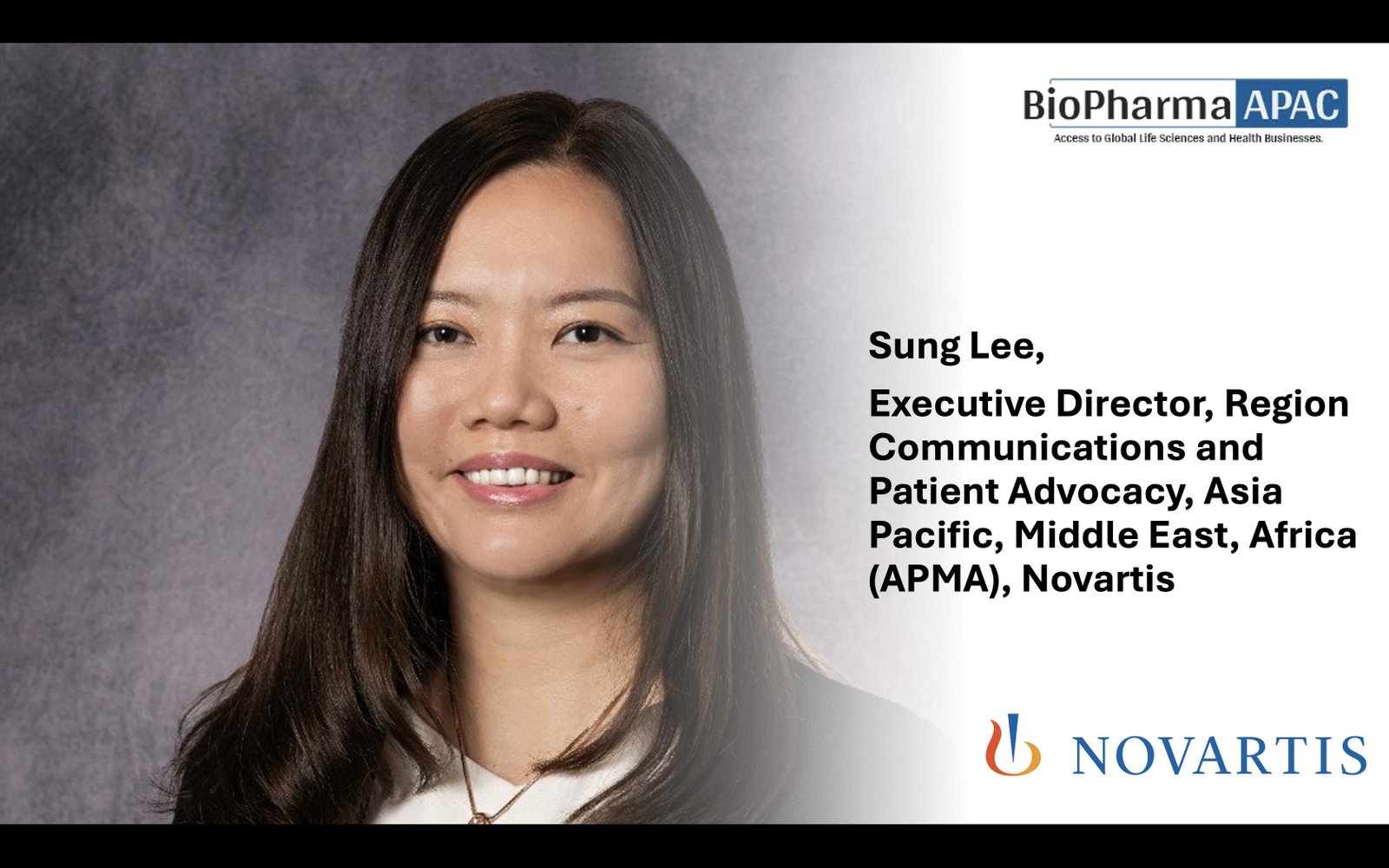
05 January 2026 | Monday | Opinion | By Sung Lee, Executive Director, Region Communications and Patient Advocacy, Asia Pacific, Middle East, Africa (APMA), Novartis
Real Change Starts with Listening
Across the Asia Pacific, Middle East, and Africa, healthcare systems are facing mounting pressures with rising rates of preventable chronic disease, gaps in early detection, and persistent inequities in access to treatment. Too often, solutions are designed top-down for the masses, missing the realities of those most affected. Yet, the most powerful ideas often come from those living these challenges daily. Patient communities should be treated as experts when it comes to their care and delivering solutions.
That’s the spirit behind the Alliance & Partnerships for Patient Innovation & Solutions (APPIS) Innovator Program which was launched as part of the APPIS initiative in 2022. Backed by an external Patient Council and Novartis, its aim is to recognize the efforts of patient organizations, helping them scale their programs and put patient voice at the center of care.
Change Begins Close to Home
A key lesson from the Program is that transformation often starts at the community level. Our 2024 winners demonstrate how grassroots initiatives and community connections can spark real change.
Building breast cancer awareness and advocacy with young Australian women
So Brave, an Australia-based breast cancer group, had already developed a network of young breast cancer survivors who go out to their communities, share their stories and raise awareness in women aged 15-40. Through the APPIS Innovator Program they aimed to scale the reach of their “SMART Women are #breastaware” workshops by training new facilitators to reach more young women in their communities. To that end, So Brave recruited eight young breast cancer survivors in Queensland and trained them as facilitators for local workshops. They also launched a social media campaign to raise awareness, reaching thousands of people across Australia.
These efforts boosted engagement with So Brave, with more volunteers and expansion in the schools and colleges they visit. The latest workshops have also received encouraging feedback from the attendees, creating momentum around regular breast checks. But this is just the beginning as the new facilitators will continue to deliver the program in their communities reaching more young women and hopefully training the next generation of facilitators. Additionally, So Brave’s growing reputation and social media following allows them to reach communities across Australia and beyond.
“Education is a long-term value proposition. It gets conversations started, it builds confidence in young people to know what to do and how to advocate for their bodies. The real impacts are in the conversations had at home the night of the workshop, in the car after school and in the quiet moments,” said Rachelle Panitz, Managing Director, So Brave. “In the longer-term, this education means that young people know they can ask questions and seek a second opinion for any health concern including breast cancer.”
Addressing diverse cultural beliefs and health literacy levels in South Africa
Since 2002, the Breast Health Foundation has educated the South African public on breast cancer and health, increasing awareness and empowering women. Their winning initiative was to partner with the APPIS Innovator Program to better understand the level of knowledge about breast health in a cross section of South African communities and use these insights to drive targeted campaigns to overcome cultural barriers and to promote more accurate understanding of breast health.
The Foundation engaged over 9,200 women in the Breast Health Assessment through community roadshows, digital campaigns and rewards-based programs. Insights revealed only 26% of women check their breasts monthly and 32% have had a mammogram. Importantly, they learned that what’s preventing women from getting checked is the fear of what they may find. These grassroots findings now shape targeted awareness strategies.
“The data-driven platform revealed key gaps which are now informing more targeted awareness strategies. This partnership has therefore not only increased immediate access but also built the foundation for sustained early detection practices,” said Louise Turner, Executive Director, Breast Health Foundation. “We’re also integrating these insights into the rollout of the AI-powered personalized risk assessment tool, ensuring tailored, actionable guidance for each woman.”
By listening to those communities impacted and seeking to understand the issues, these programs are able to be more inclusive and responsive to the real-life barriers faced within different groups.
Partnership to drive implementation of national policy for local communities
The development of national policies to address healthcare gaps and issues is just the first step towards patients on the ground receiving the care they need. The Cancer Warriors Foundation in the Philippines is dedicated to helping save lives, build better futures and keep hope alive for children and adolescents living with cancer, as well as young cancer survivors and their families. Their winning Innovator Program initiative demonstrates how patient advocacy can drive change at the health system level ensuring local patients benefit from national initiatives.
This started with the development of a handbook to support the acceleration of localization of the National Integrated Cancer Control Act (NICCA). With this in place, The Foundation was then able to use it to create momentum at a local level.
As a result, in Baguio and Quezon Cities a policy is now in place to localize NICCA ensuring funds are allocated to support local governance mechanisms and operating structures. All barangays in Baguio City now have integrated cancer literacy promotion and established processes and referral systems for early screening and timely treatment, in addition to support for cancer patients and their families. In Quezon City, a policy advancing and accelerating cervical cancer elimination has also been passed with budget for cancer programs and services substantially increased. And this is just the beginning, with five other cities in the National Capital Region in the initial phases of localization.
Carmen Auste, CEO of Cancer Warriors Foundation explains “At the heart of NICCA localization is multistakeholder and multisectoral collaboration. Awareness raising is embedded in all initiatives and for all stakeholders as part of building local ownership and ensuring that policies, programs and initiatives are evidence-based and shaped by inputs from people with lived experiences. Training and engaging patient ambassadors and their carers in all phases of the localization process ensures that their voices are heard, amplified, recognized and more importantly that their needs and concerns are acted upon.”
They have also partnered with international development organizations to implement innovative pilots to enhance access and availability of cancer services. Mobile lung cancer screening vans, fitted with AI technology, have already reached 20,000 people in Bataan, and this technology is being integrated into more facilities, with plans to expand to breast and cervical cancers.
A pilot program in Iloilo has brought cervical screening to women in hard-to-reach areas, through expanding technology for HPV DNA screening and training healthcare providers. It’s also developed referral pathways from primary health care to secondary and tertiary facilities, and equipped laboratories to process self-collected specimens. Patients, peer navigators, and local advocates have been trained to sustain the program.
The patient voice is central to every element of these programs, empowering new voices in the local regions to maintain efforts in their local communities. By putting policy into practice, they are helping build a more responsive and inclusive cancer care system from the ground up.
Partnership Is the Path Forward
Whether at the community or system level, the lesson is the same: when we listen to and learn from patients, we see real, lasting change. These stories aren’t just proof points, they’re reminders that progress happens when we work together, share knowledge, and put people at the centre of every solution. It’s also a reminder that healthcare is, at its heart, about connection and care.
As we look to the future, it’s clear that the most resilient and innovative health systems will be those that embrace partnership with patient groups as a core principle. For the pharmaceutical industry and all healthcare stakeholders, this means moving beyond transactional relationships and making collaboration with patient organizations a foundation for how we work.
Most Read
- Can APAC Biomanufacturing Decarbonise Without Pricing Itself Out?
- The Algorithm on the GMP Floor: AI Promises a Smarter Plant. Regulators Demand the Audit Trail.
- APAC's Peptide-Capacity Gamble
- After the Rush: APAC's mRNA and Vaccine Capacity Hangover
- The Biosimilar Race: Factory to the World — or Stuck in the Copycat Economy?
- The Vein-to-Vein Problem: Can APAC's Cold Chain Carry Advanced Therapies?
- Vectors, Plasmids and the CGT Trap: APAC's Cell and Gene Therapy Ambitions Face an Upstream Bottleneck
- Can APAC Build Radioligand Therapy Before the Atoms Decay?
- The Great Biopharma Reset: 50 Developments That Changed Everything in H1 2026
- Beyond the Trial: Can Real-World Evidence Earn Regulatory Trust in APAC?
- Beyond the Obvious Giant: Where APAC's Clinical Trials Go Next
- The Frontier That Won’t Quite Arrive
Bio Jobs
- Sanofi Turns The Page As Belén Garijo Steps In And Paul Hudson Steps Out
- Global Survey Reveals Nearly 40% of Employees Facing Fertility Challenges Consider Leaving Their Jobs
- BioMed X and AbbVie Begin Global Search for Bold Neuroscience Talent To Decode the Biology of Anhedonia
- Thermo Fisher Expands Bengaluru R&D Centre to Advance Antibody Innovation and Strengthen India’s Life Sciences Ecosystem
- Accord Plasma (Intas Group) Acquires Prothya Biosolutions to Expand Global Plasma Capabilities
- ACG Announces $200 Million Investment to Establish First U.S. Capsule Manufacturing Facility in Atlanta
- AstraZeneca Invests $4.5 Billion to Build Advanced Manufacturing Facility in Virginia, Expanding U.S. Medicine Production
News