Hengrui Pharma And Braveheart Bio Report Strong Phase 2 Results For HRS 1893 In Obstructive Hypertrophic Cardiomyopathy
01 April 2026 | Wednesday | News
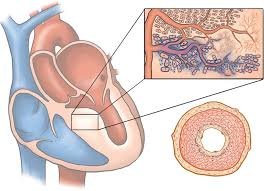
Results of dose-ranging study suggest potential for best-in-class clinical profile across efficacy, safety and ease of use, including simplified dosing regimen with minimal to no titration necessary
HRS-1893 treatment resulted in rapid and substantial reductions in left ventricular outflow tract gradient (Valsalva LVOT-G complete gradient response (<30 mmHg) of up to 86%) with minimal change in left ventricular ejection fraction (LVEF; range of decrease between 1.8% and 2.7%)
Data highlighted in a late-breaking featured clinical research presentation at the American College of Cardiology's Annual Scientific Session & Expo
Hengrui Pharma (Hengrui), and Braveheart Bio announced results from a multi-center, randomized, open-label Phase 2 dose-ranging study evaluating HRS-1893 (also known as BHB-1893), an investigational next-generation cardiac myosin inhibitor, in patients with obstructive hypertrophic cardiomyopathy (oHCM). In the 42 patient study, HRS-1893 treatment resulted in rapid and substantial reductions in left ventricular outflow tract gradient (LVOT-G), an established measure of cardiac obstruction.
"The results of this study build on the clinical data observed to date and reinforce BHB/HRS-1893's potential as a highly differentiated treatment option for patients with oHCM," said Sheng Qi, M.D., Executive Director and Head of Cardiovascular, Hengrui Pharma. "We look forward to further clinical development and continued partnership with Braveheart as we aim to deliver improved treatment options for global patients."
"We believe these results are consistent with a best-in-class clinical profile, with the potential to become a novel, promising treatment option for patients with obstructive hypertrophic cardiomyopathy," said Travis Murdoch, M.D., Chief Executive Officer and President, Braveheart Bio. "The emerging clinical efficacy profile, along with the potential for a highly simplified dosing regimen, may address key limitations of current therapies and unlock adoption by a broad population of patients with urgent needs. These results support our planned initiation of a global pivotal clinical study in 2026."
The multi-center, randomized, open-label Phase 2 dose-ranging study (NCT06516068) of 42 patients was designed to measure efficacy and safety of BHB/HRS-1893 and to evaluate dose regimen options that could shorten the time to an effective dose. Patients were randomized 1:1:1 to receive oral BHB/HRS-1893 20 mg twice daily (potentially titrated up to 60 mg; Group 1), 40 mg twice daily (potentially titrated up to 80 mg; Group 2) or 40 mg once-daily (potentially titrated up to 120 mg; Group 3), for 12 weeks. The study design included the option for individual dosage adjustment based on evaluation of left ventricular ejection fraction (LVEF) and Valsalva LVOT-G. The primary endpoint was change in Valsalva LVOT-G from baseline to Week 12.
BHB/HRS-1893 treatment resulted in rapid and substantial reductions in LVOT-G with minimal change in LVEF across dose groups. Range of complete Valsalva LVOT-G response (<30 mmHg) was between 50% and 86% and the range of LVEF decrease was between 1.8% and 2.7%. BHB/HRS-1893 displayed rapid onset of effect, with the average Valsalva LVOT-G below 30 mmHg as early as day 5. The study found 89% of patients well served at a 40 mg or 60 mg twice-daily dose regimen, with minimal to no titration required to achieve the target dose. Importantly, all patients were titrated to a final dose based solely on gradient reduction below LVOT-G <30 mmHg. BHB/HRS-1893 treatment also demonstrated improvements in key secondary and exploratory measures in Group 2, the dose selected for open-label extension (OLE), including increase in pVO2 of 1.0 mL/kg/min, KCCQ-CSS of 10.5 points, and reduction in NT-proBNP of 88%.
All 42 patients enrolled in the OLE part of the study and continued to receive administration of BHB/HRS-1893. At Week 39 of the OLE, the complete Valsalva LVOT-G response rate was 88%.
BHB/HRS-1893 was generally well tolerated, and no new safety signals were identified in the 12-week study period. Reported adverse events were mild to moderate in severity, and no adverse events led to treatment interruption or discontinuation. No patients experienced ejection fraction values below 55% during the 12-week study period.
Results of the study were highlighted in a late-breaking featured clinical research presentation at the American College of Cardiology's Annual Scientific Session & Expo.
Most Read
- Can APAC Biomanufacturing Decarbonise Without Pricing Itself Out?
- The Algorithm on the GMP Floor: AI Promises a Smarter Plant. Regulators Demand the Audit Trail.
- APAC's Peptide-Capacity Gamble
- After the Rush: APAC's mRNA and Vaccine Capacity Hangover
- The Biosimilar Race: Factory to the World — or Stuck in the Copycat Economy?
- The Vein-to-Vein Problem: Can APAC's Cold Chain Carry Advanced Therapies?
- Vectors, Plasmids and the CGT Trap: APAC's Cell and Gene Therapy Ambitions Face an Upstream Bottleneck
- Can APAC Build Radioligand Therapy Before the Atoms Decay?
- The Great Biopharma Reset: 50 Developments That Changed Everything in H1 2026
- Beyond the Trial: Can Real-World Evidence Earn Regulatory Trust in APAC?
- Beyond the Obvious Giant: Where APAC's Clinical Trials Go Next
- The Frontier That Won’t Quite Arrive
Bio Jobs
- Sanofi Turns The Page As Belén Garijo Steps In And Paul Hudson Steps Out
- Global Survey Reveals Nearly 40% of Employees Facing Fertility Challenges Consider Leaving Their Jobs
- BioMed X and AbbVie Begin Global Search for Bold Neuroscience Talent To Decode the Biology of Anhedonia
- Thermo Fisher Expands Bengaluru R&D Centre to Advance Antibody Innovation and Strengthen India’s Life Sciences Ecosystem
- Accord Plasma (Intas Group) Acquires Prothya Biosolutions to Expand Global Plasma Capabilities
- ACG Announces $200 Million Investment to Establish First U.S. Capsule Manufacturing Facility in Atlanta
- AstraZeneca Invests $4.5 Billion to Build Advanced Manufacturing Facility in Virginia, Expanding U.S. Medicine Production
News