In this BioPharma APAC interview, Dr Yun Yen, Program Committee Chair for the 2026 ASCO Breakthrough meeting, shares a candid translational medicine perspective on why global oncology research often fails to reflect Asian cancer biology and care realities. He outlines what must change across trial design, data governance, funding, and policy to accelerate Asia led cancer innovation from bench to bedside, while strengthening collaboration with global oncology networks.

Closing Asia’s Cancer Evidence Gap Through Translational Science And Policy Leadership
02 February 2026 | Monday | Expert Insight
Dr Yun Yen of Taipei Medical University reflects on building Asia led clinical research, reshaping trial design, and translating discovery into outcomes that matter for diverse patient populations across the region.
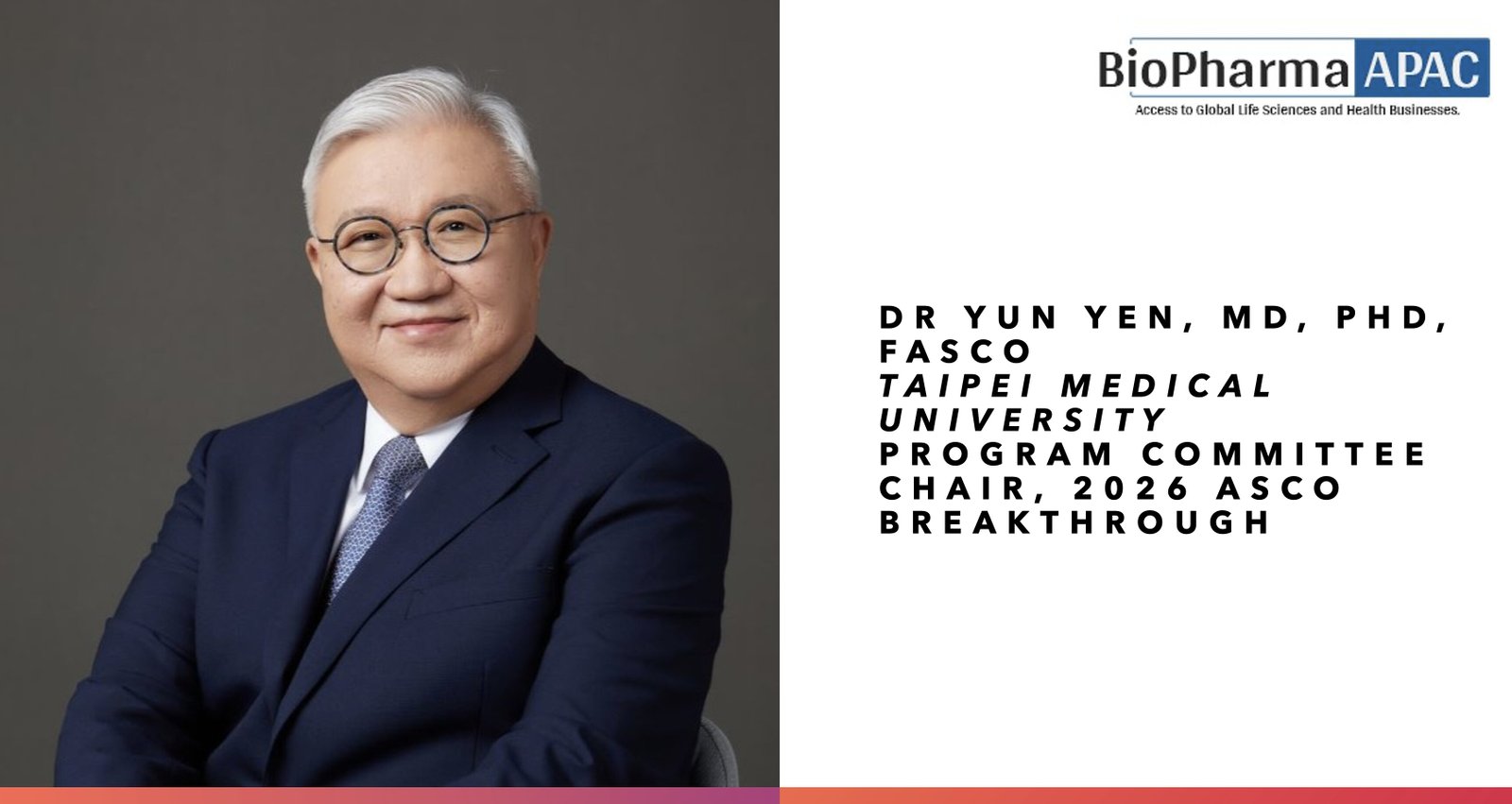
From a translational medicine perspective, where do you see the most critical gaps between cancer research conducted globally and the realities of cancer biology and patient outcomes in Asian populations?
The biggest gaps come from low Asian representation in major trials and datasets, and from treating Asia as one group despite major differences across countries and populations. Many cancers common in Asia like EGFR-driven lung cancer, EBV-related nasopharyngeal carcinoma, and HBV/HCV-related liver cancer need to be built into trial design from the start. Biomarkers and assays validated in Western settings often need local validation to work well in Asian clinics. Dosing, supportive care, and endpoints should reflect local patients and health systems. Real-world data are fragmented, and access barriers and late diagnosis limit impact. We also need more studies that focus on how to implement proven interventions in Asian settings
How can Asia strengthen locally driven clinical research ecosystems while still collaborating effectively with global oncology networks?
Asia can strengthen locally driven clinical research ecosystems by focusing on equitable partnerships, developing local talent and infrastructure, ensuring research addresses regional health priorities, and streamlining regulatory processes, while leveraging global networks for expertise and data sharing.
Part of data sharing means us showcasing our work at global and regional platforms such as the 2026 ASCO Breakthrough meeting next June in Singapore. These platforms allow us to connect investigators and partners, run practical methods workshops, convene regulators and payers, and launch joint calls with clear deliverables like MOUs, shared protocols, and seed funding.
What policy or funding shifts would most accelerate Asia led cancer innovation from bench to bedside?
Policy changes: Cancer care should be embedded in national health policy, with strong screening and early detection programs, to help new innovations reach patients at scale. Countries also need clear national data rules that protect privacy and still allow secure sharing of genomic and clinical data across institutions and borders, so large cancer atlases can be built. Health technology assessment pathways should be updated to fit precision oncology evidence like basket and platform trials, allowing faster access while collecting real world data.
Funding propositions: Stronger partnerships among government, industry, universities, and philanthropy can share risk and funding, create joint hubs, set fair rules for sharing discoveries, and build regional trial networks to move lab findings into patient care. National grant programs would also support teams across institutions that tackle Asian priority cancers, with clear milestones, open data, and early patient input. Better payment and insurance models, such as coverage with evidence development, outcomes based contracts, tiered pricing, pooled buying, and paying for essential biomarker tests, can protect families from high costs and widen access to new treatments. Using technology and AI to streamline scheduling, supply chains, billing, and record sharing, and to analyze real world data safely, can cut waste and free up money for care and research. align on methods. Institutions can support visibility by providing protected time, travel grants, and media training, and by building speaker networks that include colleagues from secondary and rural centers. Clear data governance, pre-registration of protocols, and open science practices will increase trust and impact, helping Asian evidence shape global practice.
Most Read
- Can APAC Biomanufacturing Decarbonise Without Pricing Itself Out?
- The Algorithm on the GMP Floor: AI Promises a Smarter Plant. Regulators Demand the Audit Trail.
- APAC's Peptide-Capacity Gamble
- After the Rush: APAC's mRNA and Vaccine Capacity Hangover
- The Biosimilar Race: Factory to the World — or Stuck in the Copycat Economy?
- The Vein-to-Vein Problem: Can APAC's Cold Chain Carry Advanced Therapies?
- Vectors, Plasmids and the CGT Trap: APAC's Cell and Gene Therapy Ambitions Face an Upstream Bottleneck
- Can APAC Build Radioligand Therapy Before the Atoms Decay?
- The Great Biopharma Reset: 50 Developments That Changed Everything in H1 2026
- Beyond the Trial: Can Real-World Evidence Earn Regulatory Trust in APAC?
- Beyond the Obvious Giant: Where APAC's Clinical Trials Go Next
- The Frontier That Won’t Quite Arrive
Bio Jobs
- Sanofi Turns The Page As Belén Garijo Steps In And Paul Hudson Steps Out
- Global Survey Reveals Nearly 40% of Employees Facing Fertility Challenges Consider Leaving Their Jobs
- BioMed X and AbbVie Begin Global Search for Bold Neuroscience Talent To Decode the Biology of Anhedonia
- Thermo Fisher Expands Bengaluru R&D Centre to Advance Antibody Innovation and Strengthen India’s Life Sciences Ecosystem
- Accord Plasma (Intas Group) Acquires Prothya Biosolutions to Expand Global Plasma Capabilities
- ACG Announces $200 Million Investment to Establish First U.S. Capsule Manufacturing Facility in Atlanta
- AstraZeneca Invests $4.5 Billion to Build Advanced Manufacturing Facility in Virginia, Expanding U.S. Medicine Production
News